One Database, Eleven String Literals
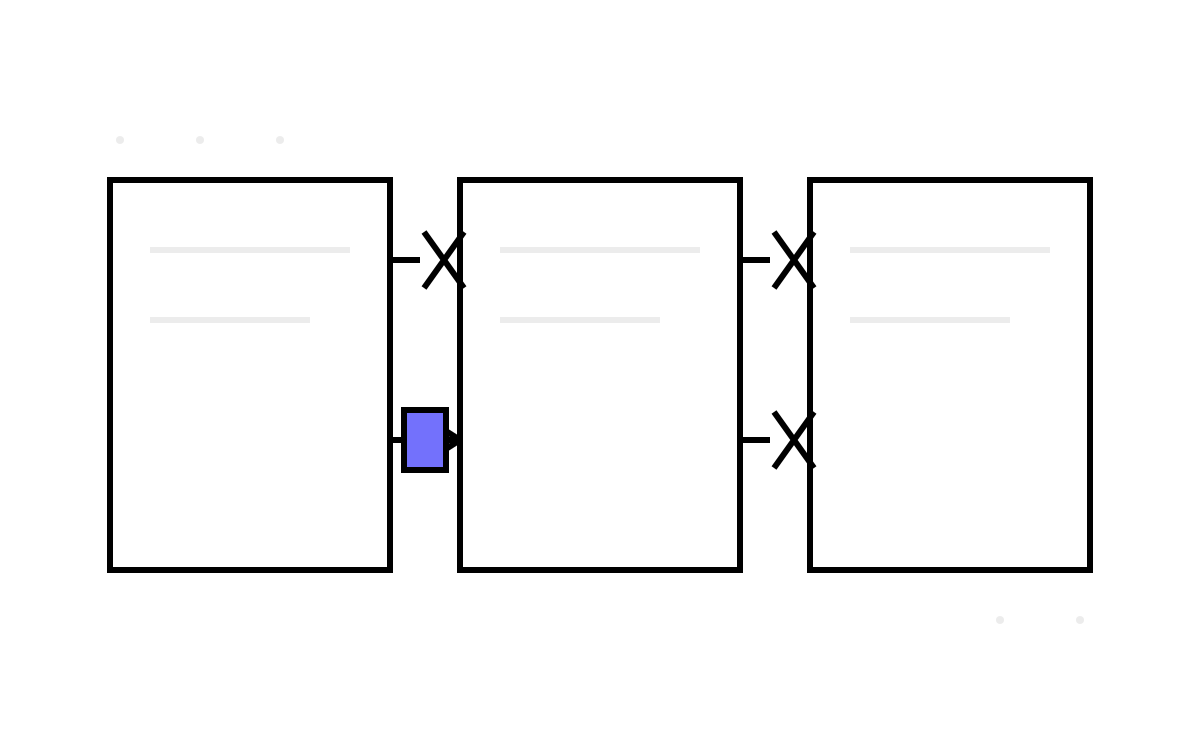
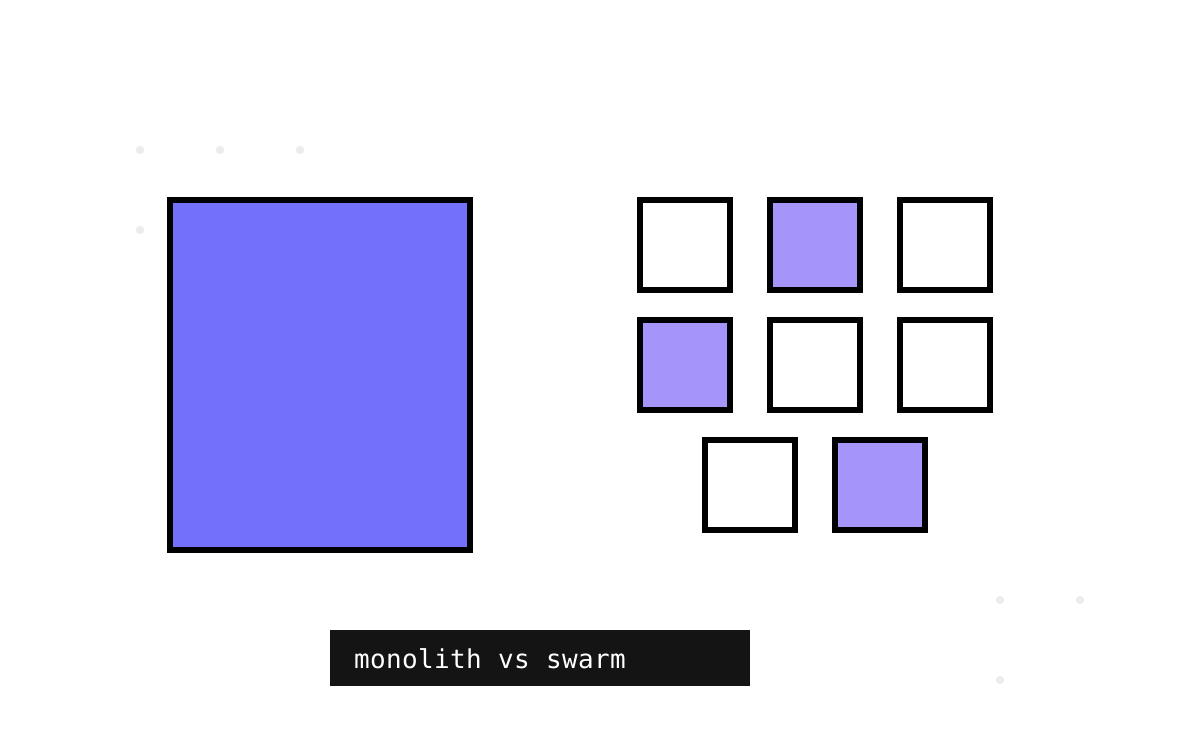
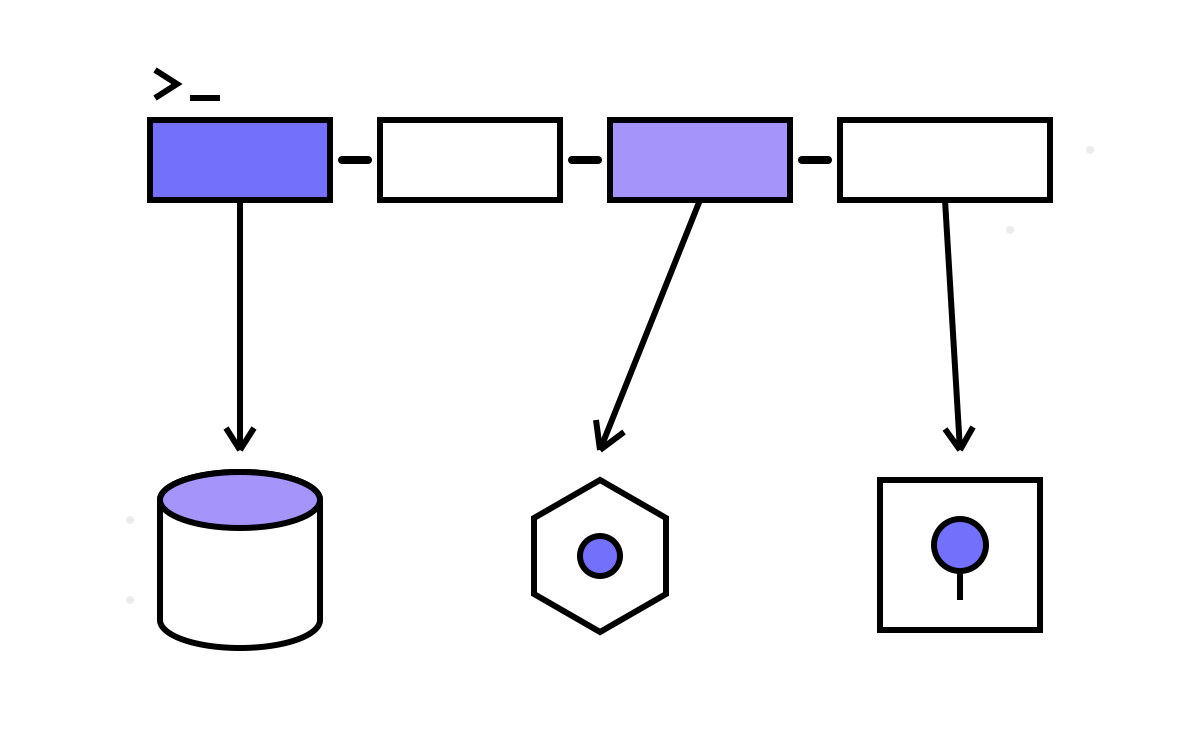
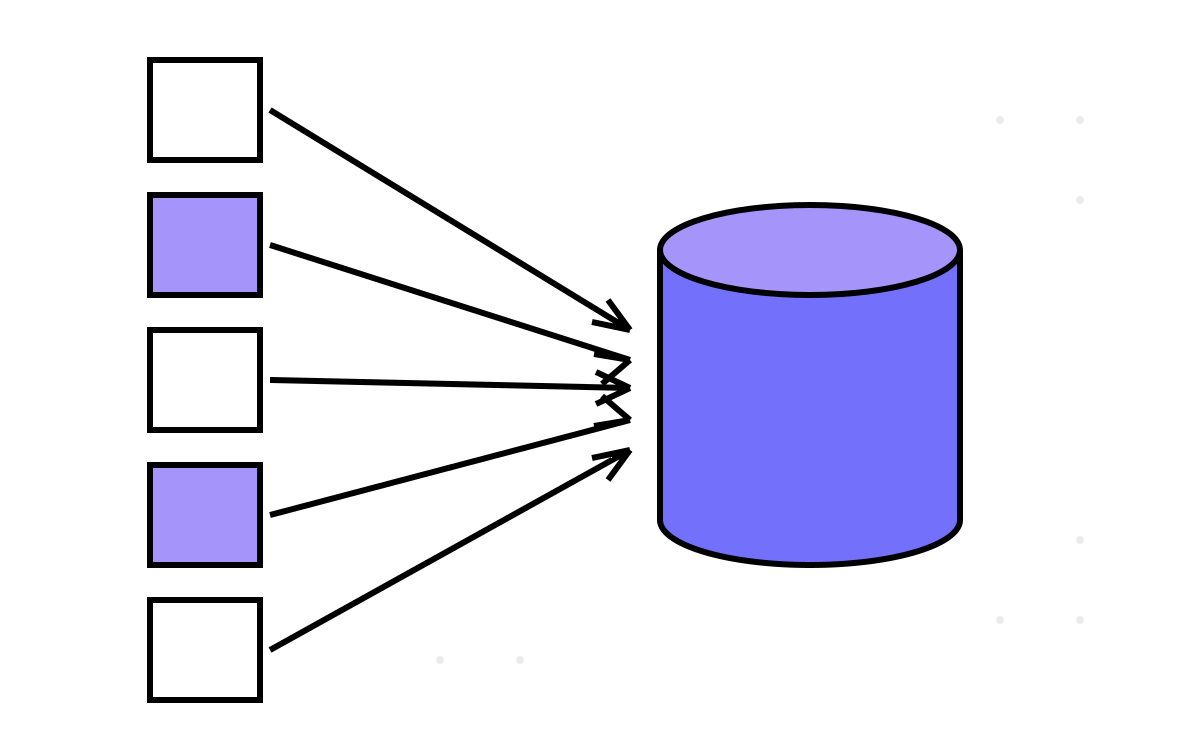
Four physical Mongo databases collapse into one when Trill is rebuilt as a monolith - and the only thing keeping the modules apart afterwards is a private const string copied into eleven files.
Newest first, grouped by year. Search or filter by topic.
Four physical Mongo databases collapse into one when Trill is rebuilt as a monolith - and the only thing keeping the modules apart afterwards is a private const string copied into eleven files.
Trill's monolith makes every module type internal and gives each one an explicit friend list, so a cross-module reach is not a code-review conversation - it is a build error.
DevMentors shipped Trill as nine microservice repos, then rebuilt the identical product as a modular monolith three months later - giving us a controlled experiment in architecture that almost never exists in public.
Trill's Stories service is four projects with a dependency-free domain at the bottom. Its Users service is two projects with everything in one assembly - same author, same week, same estate, opposite answers to what a layer is.
Which of ModularMonolith's three modules could become a service tomorrow, what blocks the other two, and the hardening bill the sample never pays - a retrospective on the modular monolith as a station, not a destination.
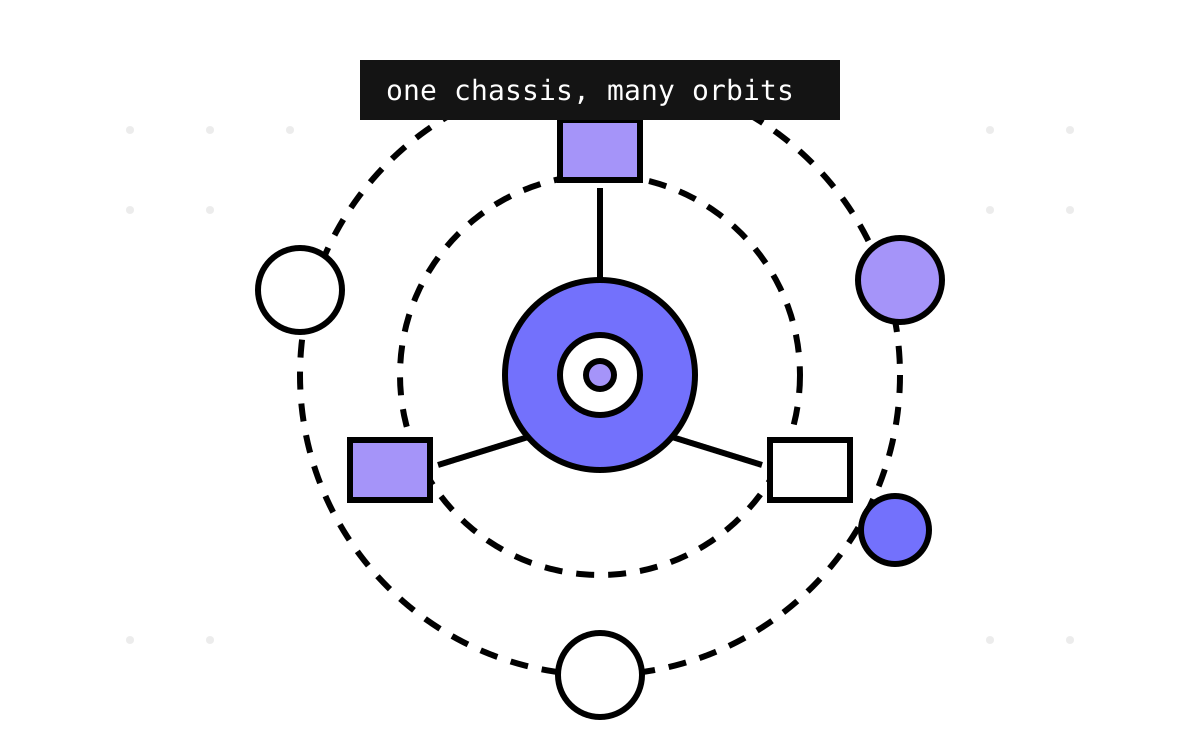
DevMentors' ModularMonolith sample packs three conference-system modules, a mini-framework and one deliberately broken contract into eighty-four C# files - opening a series that reads all of it, defects included.
The retrospective, with the ledger totalled - seven byte-identical MessageBrokers, one AggregateRoot with three meanings, what Convey genuinely optimises, where a Convey.Bootstrap meta-layer should have stood, and what a consumer should copy from this estate.
The series retrospective - what fourteen parts of reading Pacco as a system of systems actually taught, the absences the estate confesses when you list them together, how the successor evolved past DShop and where it stopped, and what the MIT licence makes of all of it.
The retrospective that closes three series on DShop - the whole map drawn once, the services wired into nothing, the skew across seventeen repos, and what reading someone else's estate end to end actually teaches.
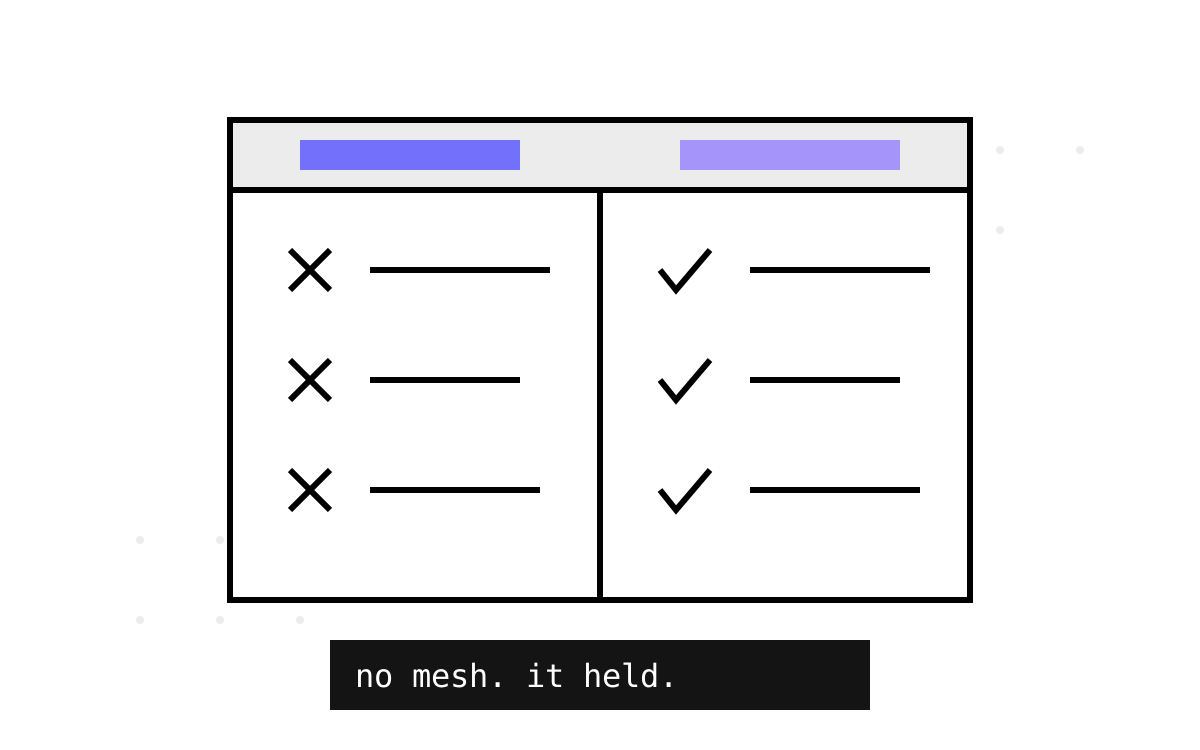
DShop exists as one deployable and as nine services built from the same requirements. Read side by side, the two builds show which decisions were decisions and which were defaults.
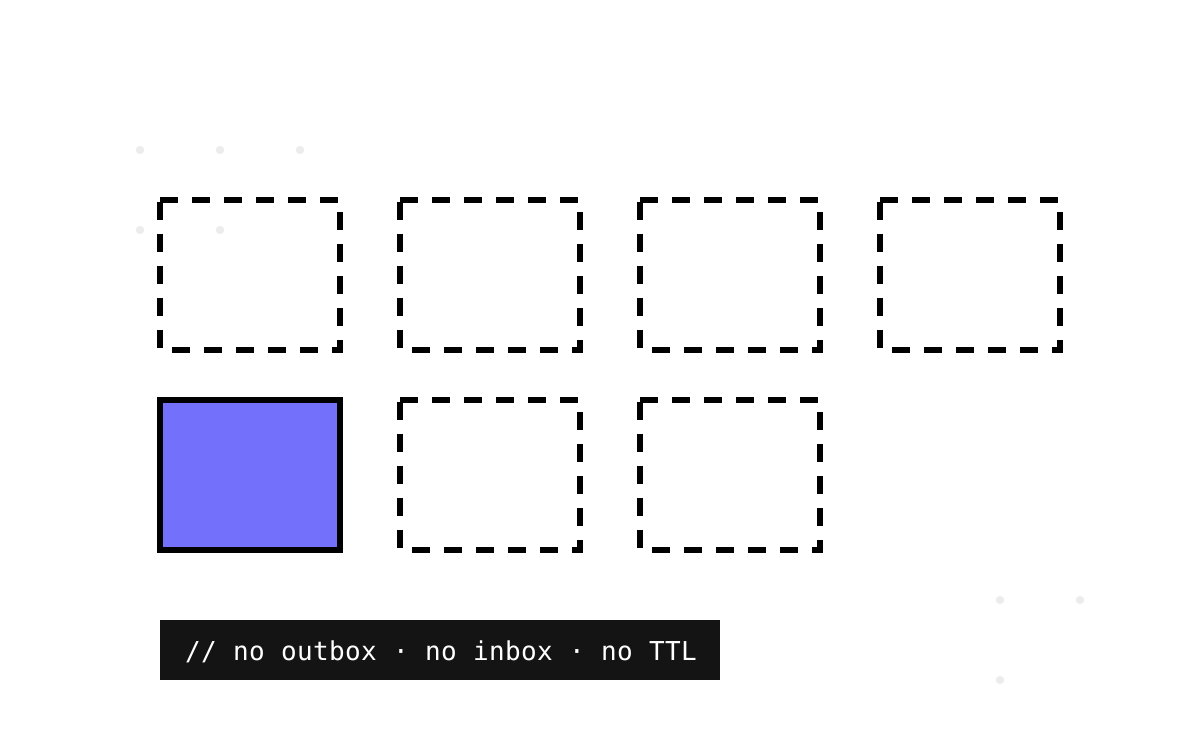
An audit of the messaging patterns DShop.Common leaves out - no outbox, no inbox, no consumed dead-letter - and how each absence became a Convey package.
Convey did not appear from nowhere and it does not stand alone. DShop, Pacco, Ntrada, Chronicle, Pactify — the DevMentors constellation the toolkit grew out of and feeds into, which repo to study for what, and the close of both series.
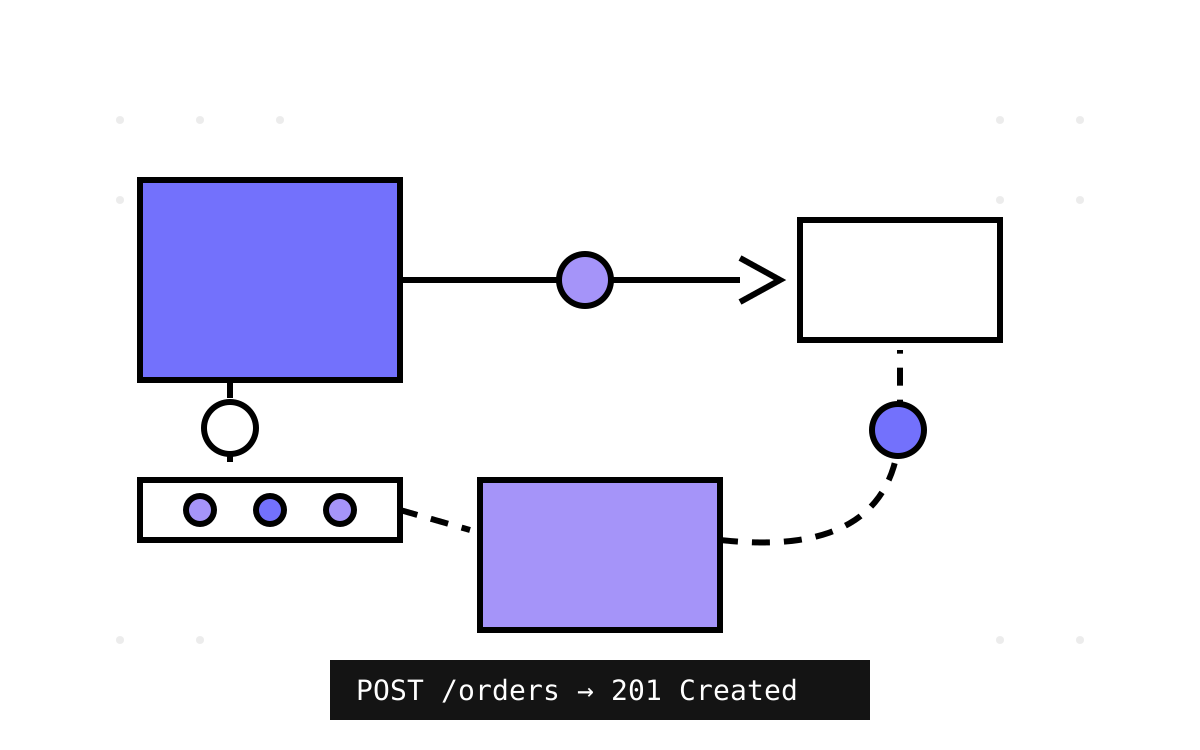
The 22-part Convey series read the packages; it never once walked the sample system that ships with them. Opening the missing chapters with the trip an order takes through Orders, Pricing and Deliveries — and what the samples quietly teach that no package README does.
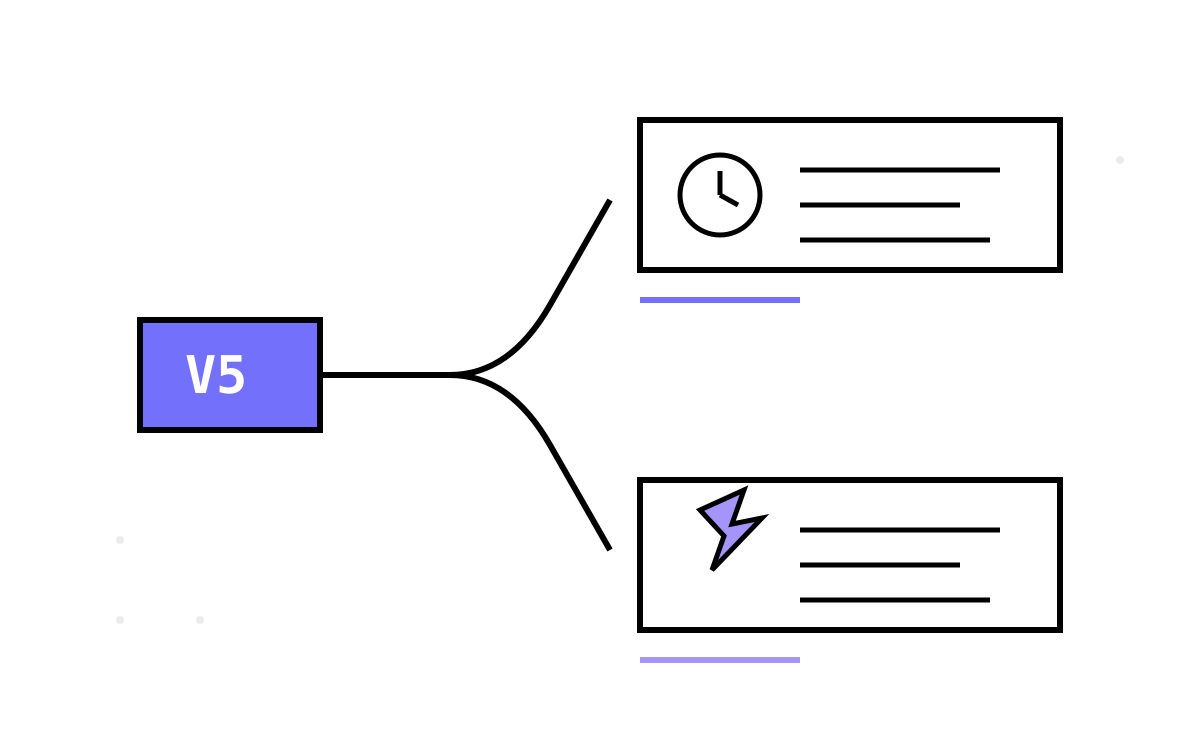
KC Star V5 exists in two materially different builds under one version number - the folder tells a batch/SCD2 story, the root file tells a real-time story, and they don't contain the same objects. What I learned from letting variants drift instead of forcing them to agree.
The retrospective: after ten parts inside DevMentors' real-time feeds sample, the honest scorecard - five decisions worth stealing for real systems, the sharp edges catalogued in one place, and the concrete backlog that separates this teaching codebase from a production deployment. Part 11 closes the FeedR deep dive.
A guided tour of FeedR, DevMentors' open-source .NET microservices sample for real-time data feeds - six services, Redis pub/sub, Apache Pulsar and a gRPC stream, and the two-tier eventing model that makes it worth reading. Part 1 of a source-level deep dive.
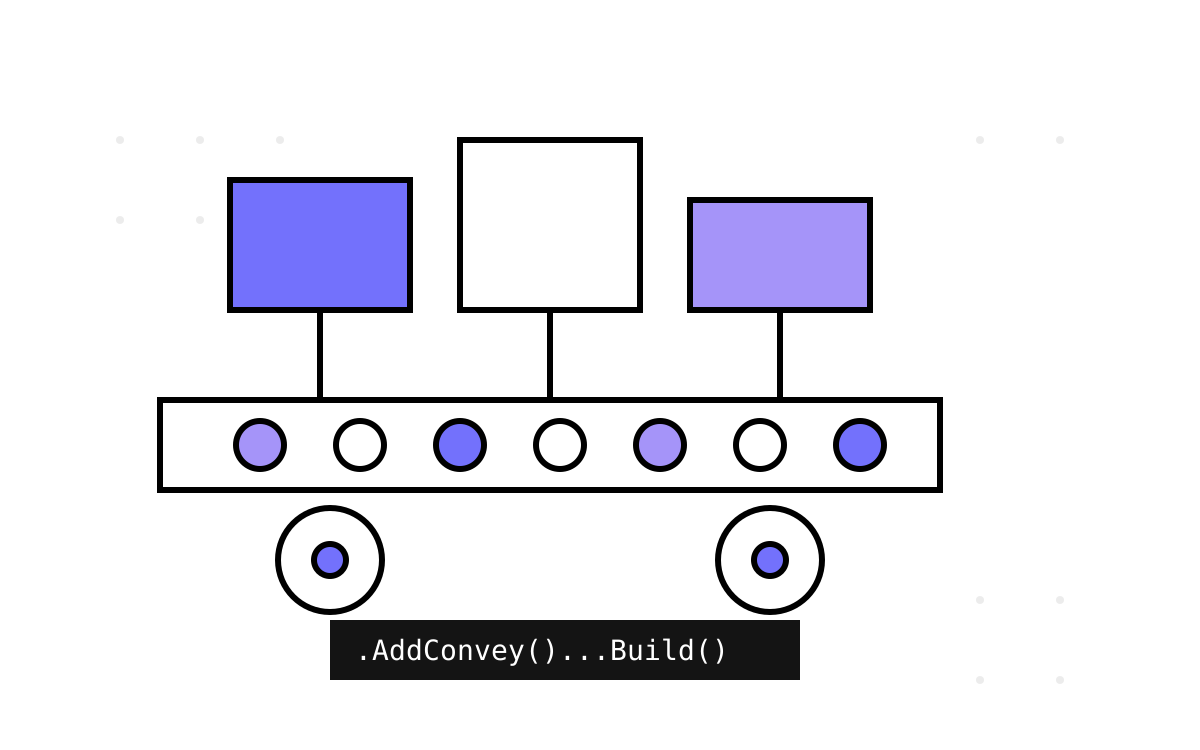
Every team's fifth microservice ships with the same four hundred lines of bootstrap code as the first four. Opening a deep-dive series on Convey, the open-source .NET toolkit that turned that boilerplate into thirty composable packages.
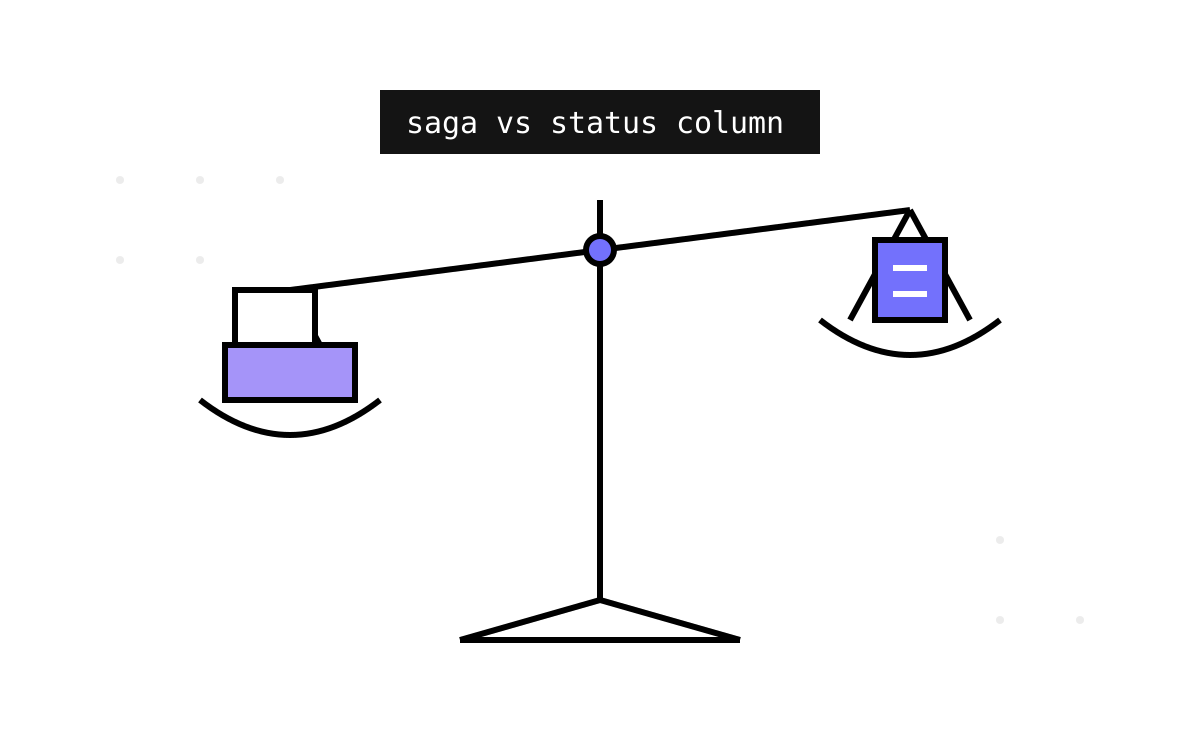
Eight parts of source-reading later, the honest retrospective. What Chronicle gets right, the timeout-shaped hole at its centre, how it stacks up against MassTransit and NServiceBus and durable execution - and the cases where a status column beats every saga framework ever written.
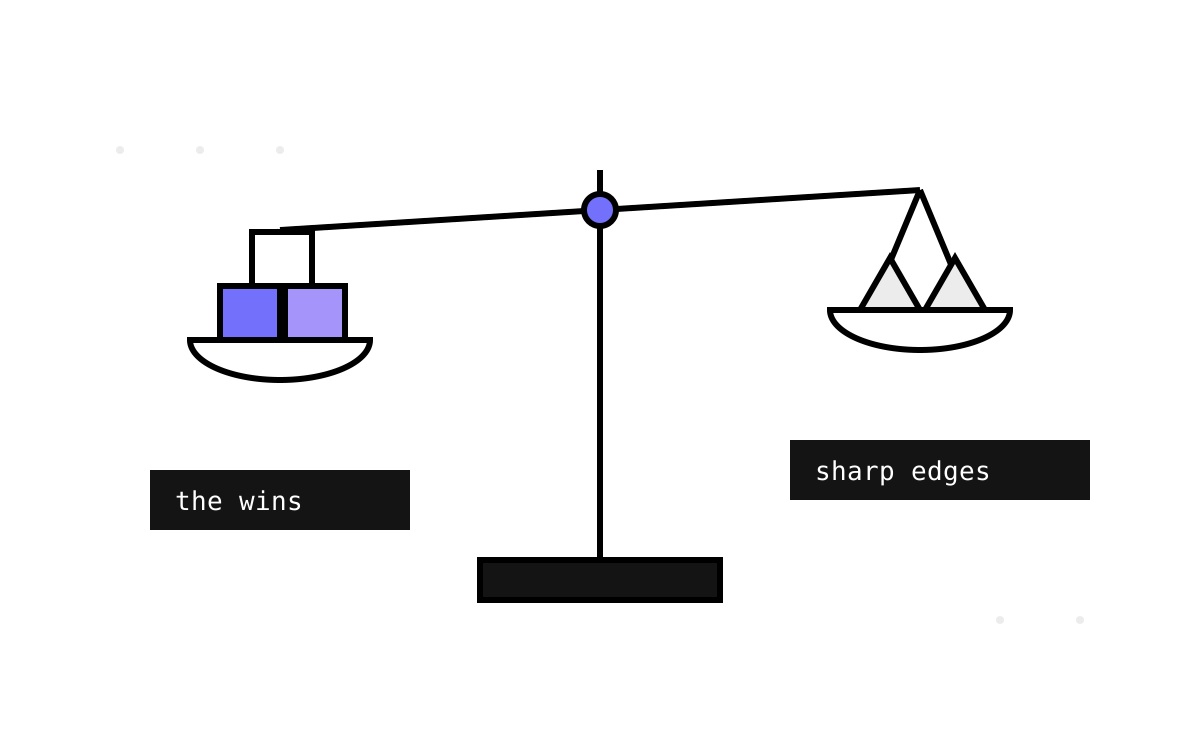
After sixteen parts inside the source, the honest retrospective - what the library gets right, the sharp edges that will cut you (singletons, statics, magic), and the projects where I would leave it on the shelf. Part 17, the conclusion of FastEndpoints in Depth.
The complete honest ledger for a Key Vault-backed service discovery layer after years in production - the debts I would pay tomorrow, the trade-offs I would sign again, and the concrete signals that it is time to graduate to App Configuration, APIM, Dapr or a mesh. Part 8, the finale of Service Discovery Without a Service Mesh.
With no terraform_remote_state anywhere in 230 stacks, every cross-stack reference in this Azure estate was a literal name string - a taxonomy you could read from ls, a coupling with zero runtime dependencies, and a silent-drift hazard on every rename. Part 7 of the Terraform on Azure series.
Static registries, Activator-created migrators, a Postgres accent, a flag that does nothing, and no test project - the closing part of the VersionKit series itemises every trade-off in the library, says when you should not use it, and sketches what comes next. Part 10 of the Entity Versioning with VersionKit series.
The honest ledger for the whole estate - what coordinating through tables actually cost, what genuinely earned its keep, and what I would reach for now instead of using the database as a message bus.
Five executables, zero queues - how an attendance platform coordinated a web app, three Azure Functions and a console job through one SQL database, and what that choice bought and cost. Part 1 of the series.
Badge gates, WFH timers and shift allowances - the shape of a seven-project intranet attendance platform, the onion it almost is, and the roadmap for fourteen more parts.