Skip to content
kc@kumarChandrachooda.com:~$ cd /blog/archive && read --section="top" 0%
Archive

Every article

Newest first, grouped by year. Search or filter by topic.

  • 556 articles
  • 41 matching
.NET 01 Nov 2025

Two Ways to Tell a Service Something Changed

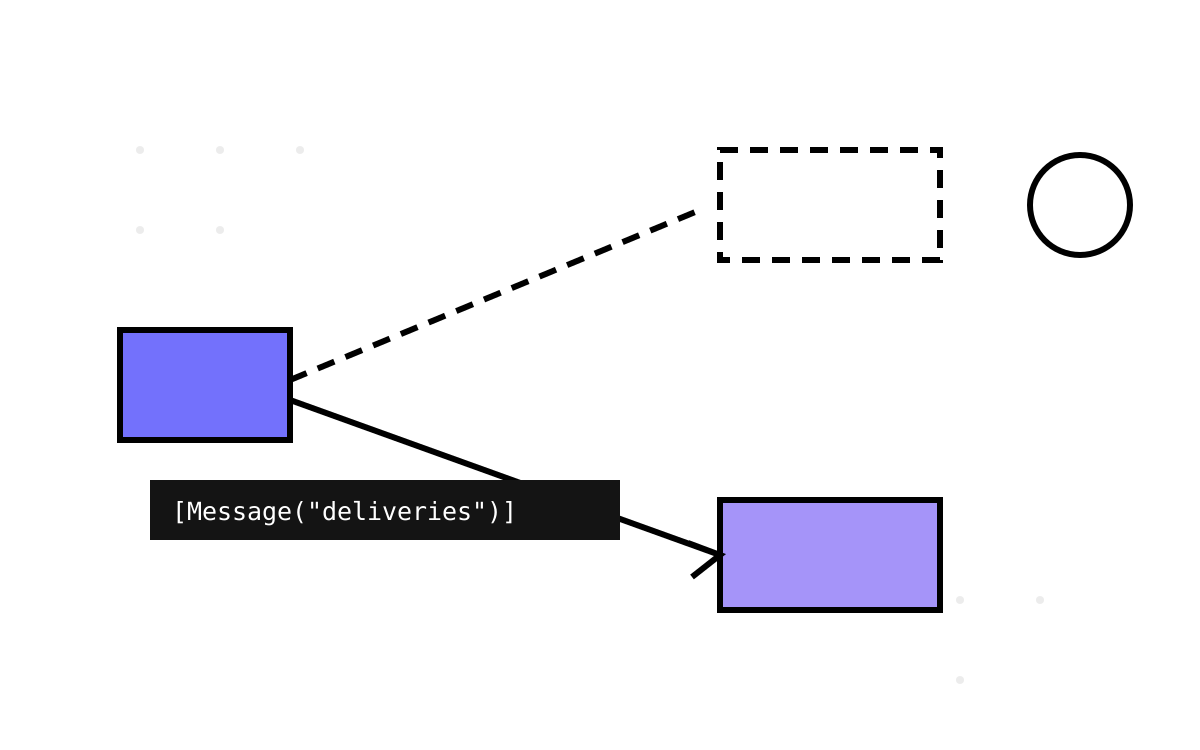
Deliveries maps domain events into integration events that carry facts while Vehicles publishes bare ids straight from its handlers - two event philosophies in one estate, and a vehicle-to-resource mirror that syncs deletes but never creates.
.NET 31 Oct 2025

A Shadow Registry of Every Message

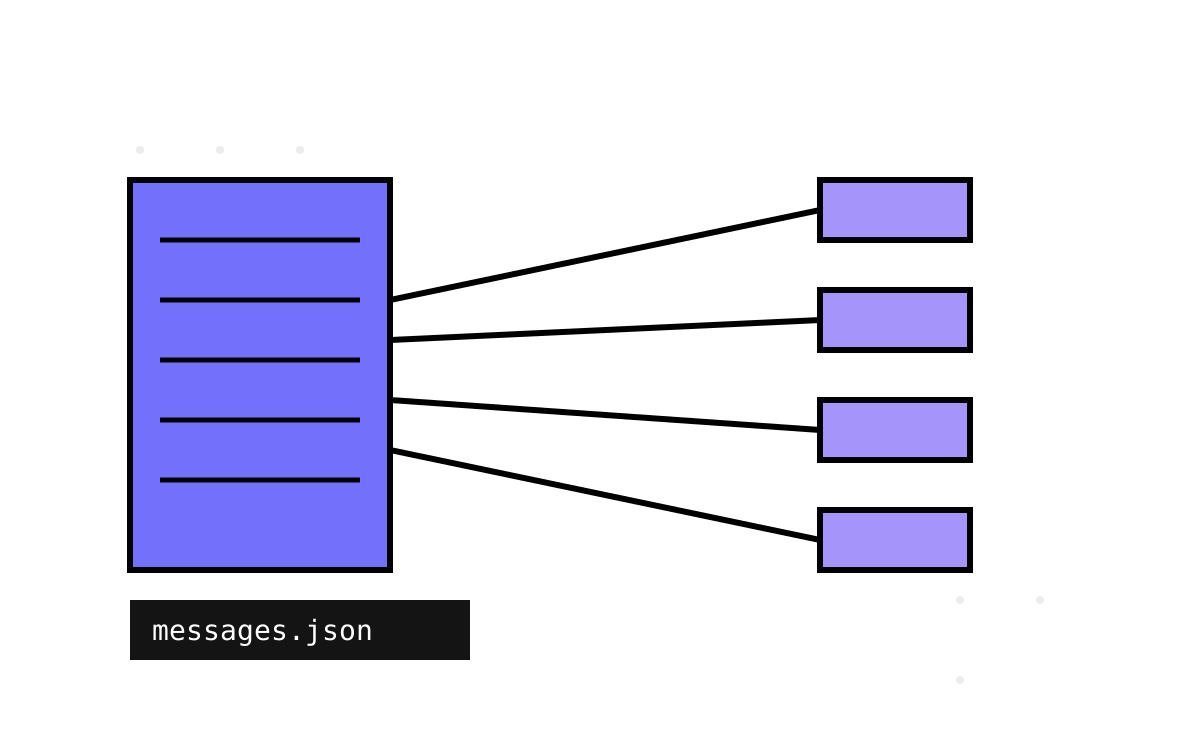
Operations subscribes to eighty estate messages from one hand-maintained JSON file - a shadow copy of every contract in the system that nothing validates, with ghost entries nobody publishes and real rejections it never lists.

Microservices 26 Oct 2025

The Message Map and the Wrong Exchange

The estate's full who-publishes-what matrix, built from the source - and the one broken cell in it. Orders' copied ParcelDeleted event declares the deliveries exchange while Parcels publishes on parcels, so Orders never learns a parcel was deleted, and neither the Pact tests nor the hand-maintained registry can catch it.

.NET 09 Sep 2025

What the Framework Doesn't Have

An audit of the messaging patterns DShop.Common leaves out - no outbox, no inbox, no consumed dead-letter - and how each absence became a Convey package.

.NET 08 Sep 2025

The Retry Path Nobody Took

A complete broker-requeue retry implementation sits in DShop.Common's subscriber, fully written and never called - and its comment explains exactly why.

.NET 07 Sep 2025

Rejected Events — a Two-Lane Error Taxonomy

DShop.Common decides a message's fate from the type of exception a handler throws - domain failures become events, infrastructure failures get retried.

.NET 07 Sep 2025

The Envelope That Scrambled Itself

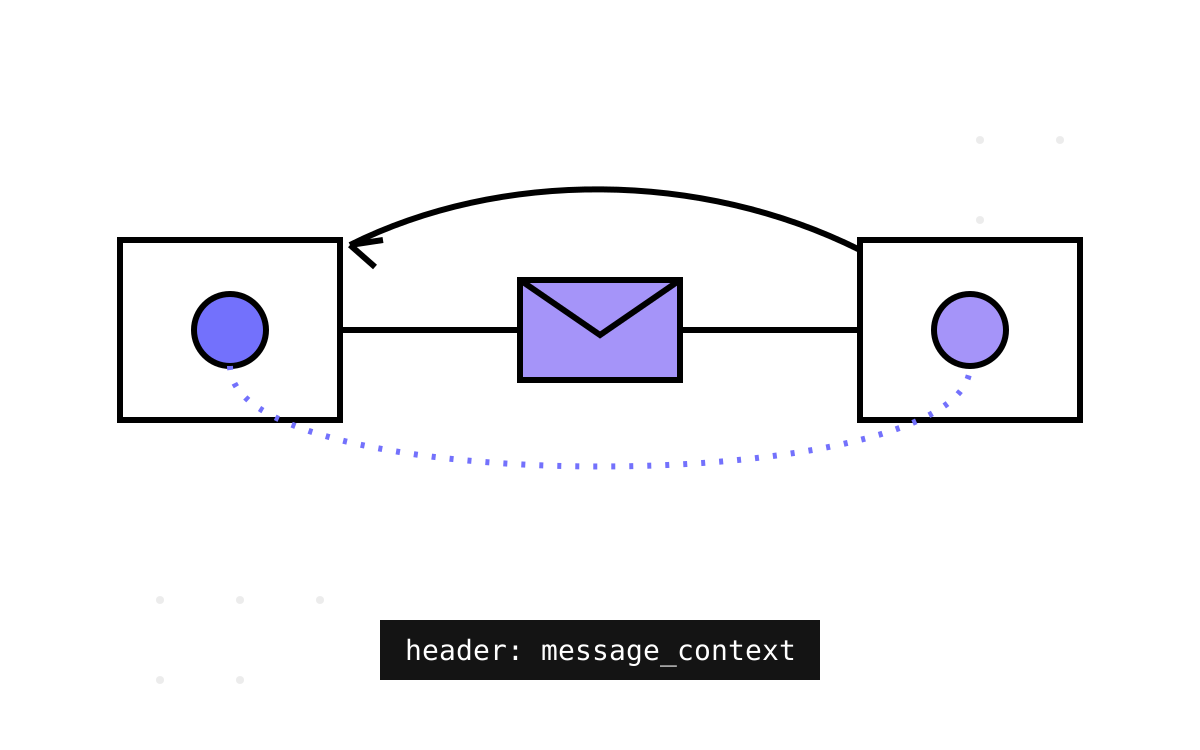
DShop.Common's correlation context threads request identity through every message hop - and a long positional argument list quietly transposes half its fields.

.NET 06 Sep 2025

Command or Event, Enforced by Convention

In DShop.Common a command and an event are published by identical code - the difference between them is a marker interface and a promise nothing enforces.

.NET 05 Sep 2025

Queue Names Are the Whole Topology

One naming class in DShop.Common decides every exchange, routing key and queue in the estate - the message topology is a string-formatting problem.

.NET 05 Sep 2025

The Framework Before the Framework

DShop.Common is the shared library nine microservices were built on - and the rough draft of a framework its authors later shipped as Convey.

.NET 18 Jul 2025

Every Tenth Tick Becomes an Order

Where FeedR's data graduates from tick to fact: the aggregator's pricing handler, a second messaging seam with envelopes and metadata, Apache Pulsar as the durable tier, and the notifier's acknowledge-as-you-go consume loop. Part 7 of the FeedR deep dive.

.NET 06 Jul 2025

Commands and Events on the Wire

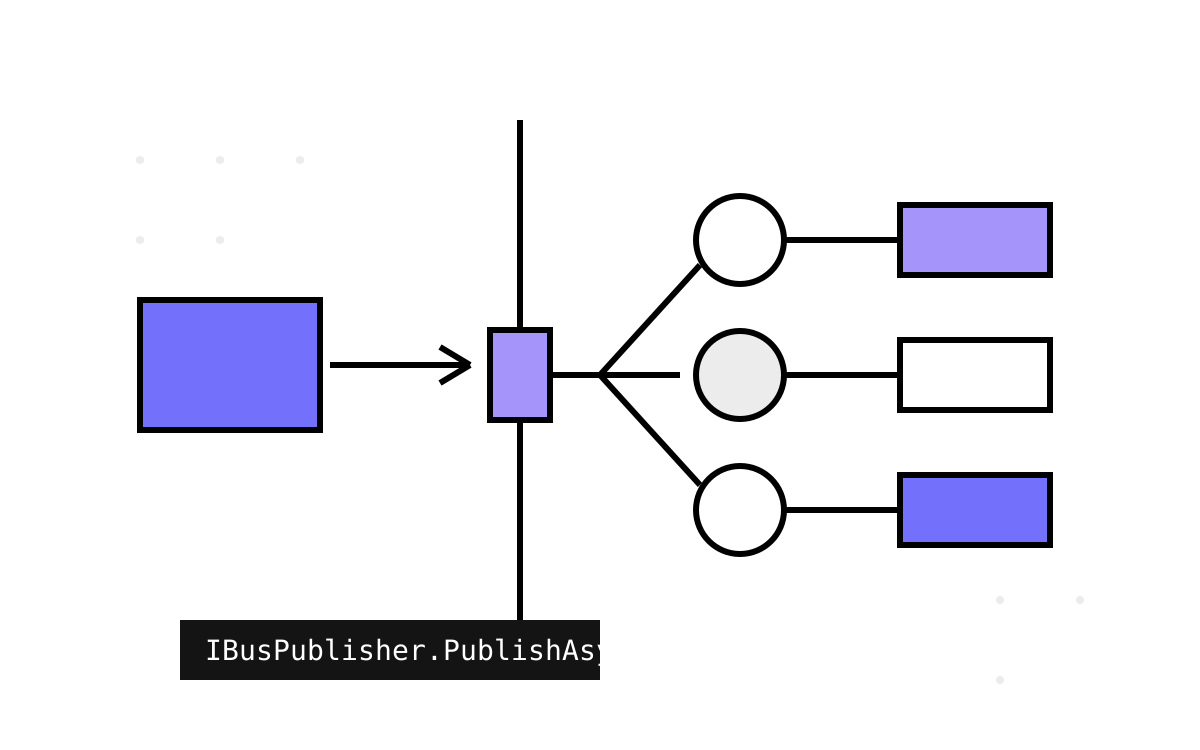
Convey's broker-CQRS bridge is seventy lines of code that make the same handler serve local dispatch and RabbitMQ delivery — one line per subscription, correlation context riding along for free.

.NET 04 Jul 2025

A Message Broker Behind an Interface

Convey's messaging abstraction is two interfaces and an attribute - and the naming conventions underneath them quietly turn your C# class names into a public wire contract.

.NET 04 Jul 2025

RabbitMQ by Convention

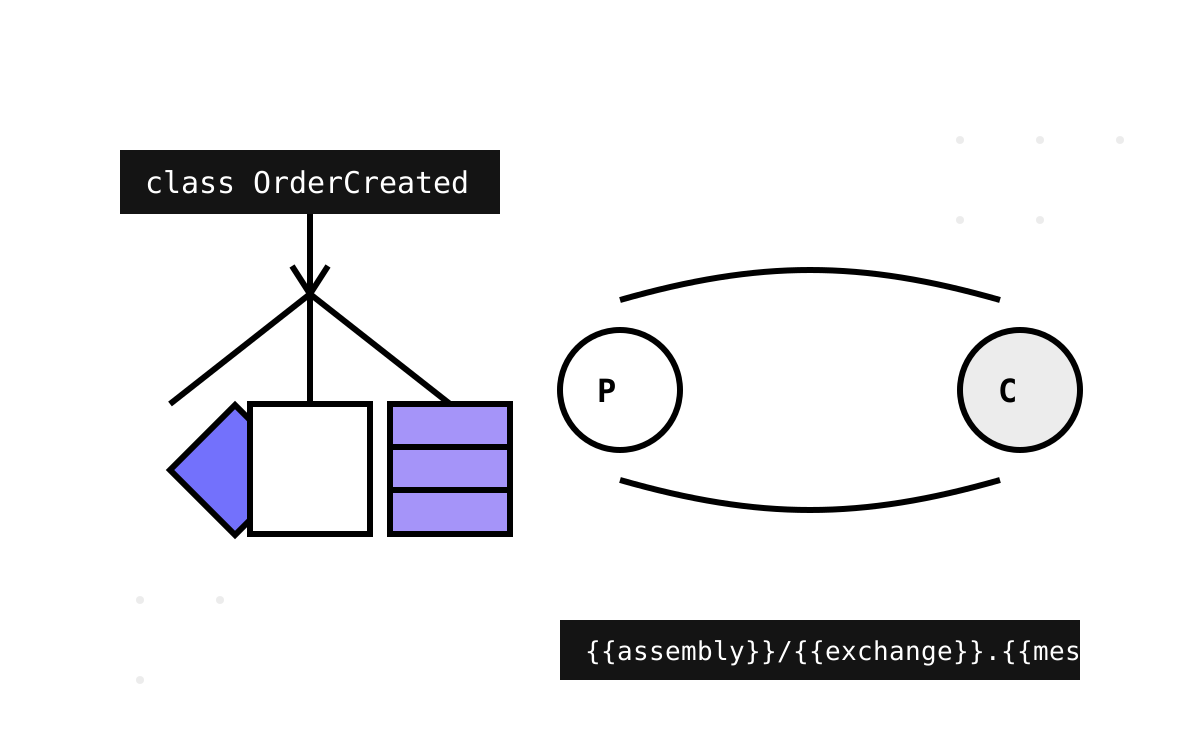
How Convey's RabbitMQ package turns a class name into an exchange, a routing key and a queue - two eager connections, a channel per thread, and a topology you never declare by hand.

.NET 18 Jun 2025

An Event Bus and a Command Bus, No Extra Package Required

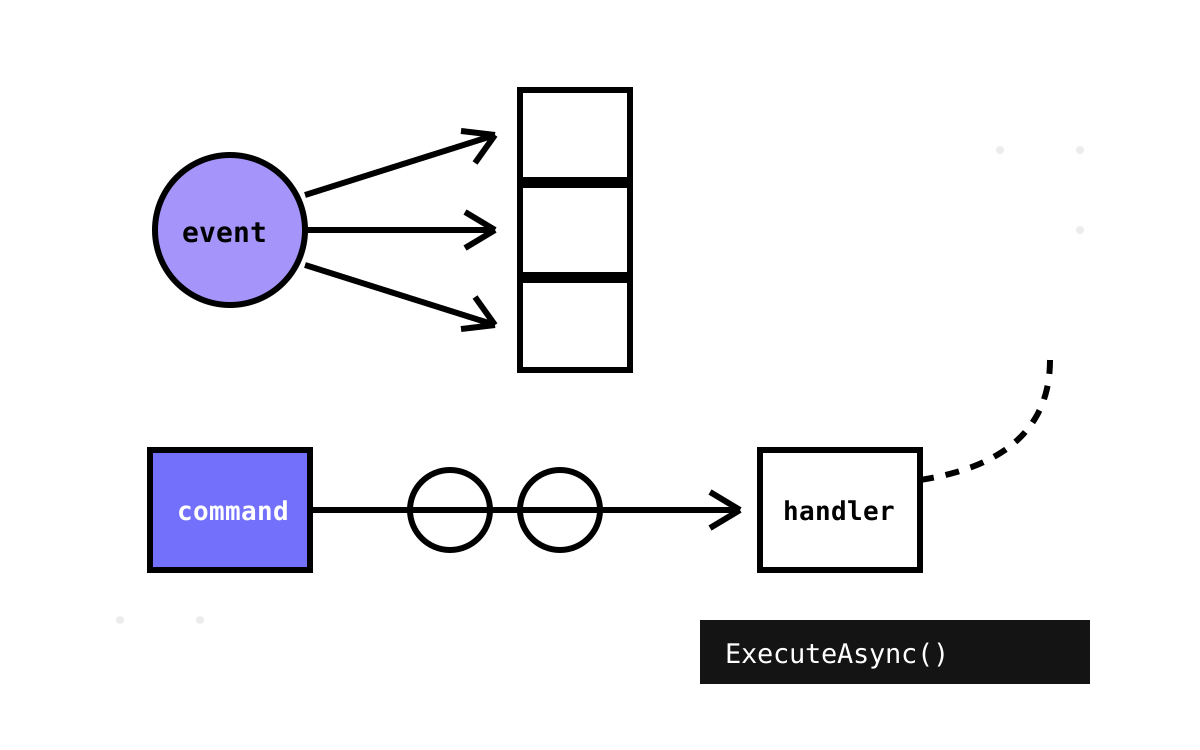
FastEndpoints ships in-process messaging that covers most MediatR use cases - events with three wait modes, commands with middleware pipelines, generic and streaming handlers. The dispatch code makes some sharp lifetime choices worth knowing. Part 11 of FastEndpoints in Depth.

Azure & DevOps 30 May 2025

The Event Hubs Module: Maps of Hubs, Rules and Consumer Groups

How one Terraform template models an entire Event Hubs estate as nested lookup maps - hubs, capture, boolean-triplet authorization rules and consumer groups - and the type-unification trap hiding in its empty environments. Part 6 of the Terraform Module Catalog.