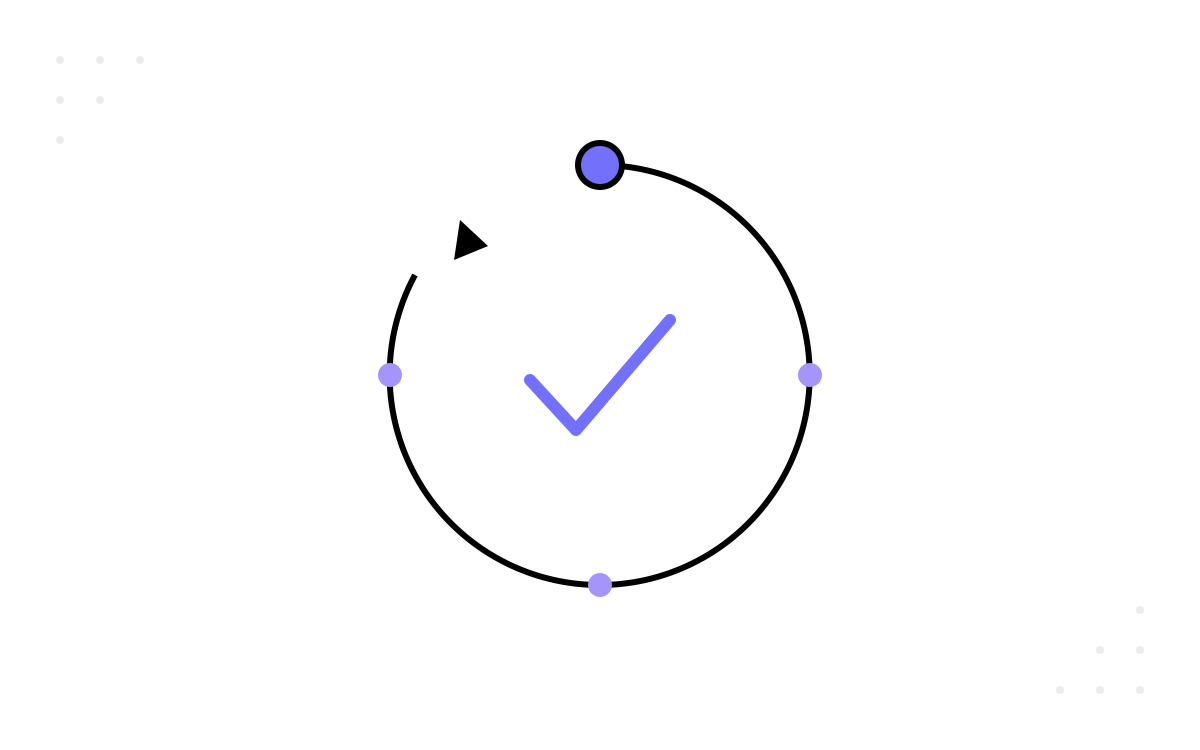
Confirmation Closes the Circle
PREVC's fifth phase is the one most cycles skip - a structured retrospective that turns observations into harness changes, and release documentation that writes the next cycle's requirements before it starts.
Newest first, grouped by year. Search or filter by topic.
PREVC's fifth phase is the one most cycles skip - a structured retrospective that turns observations into harness changes, and release documentation that writes the next cycle's requirements before it starts.
The scariest agent mistake is not the invented method that errors on first run - it is the polished code that passes. Simon Willison's argument about hallucinations, and the four failure patterns I review for.
The Code-Review-Simplify loop has no natural end - an agent will polish forever if you let it. The four breakout constraints I arm around the loop, and how I match the exit to the risk of the work package.
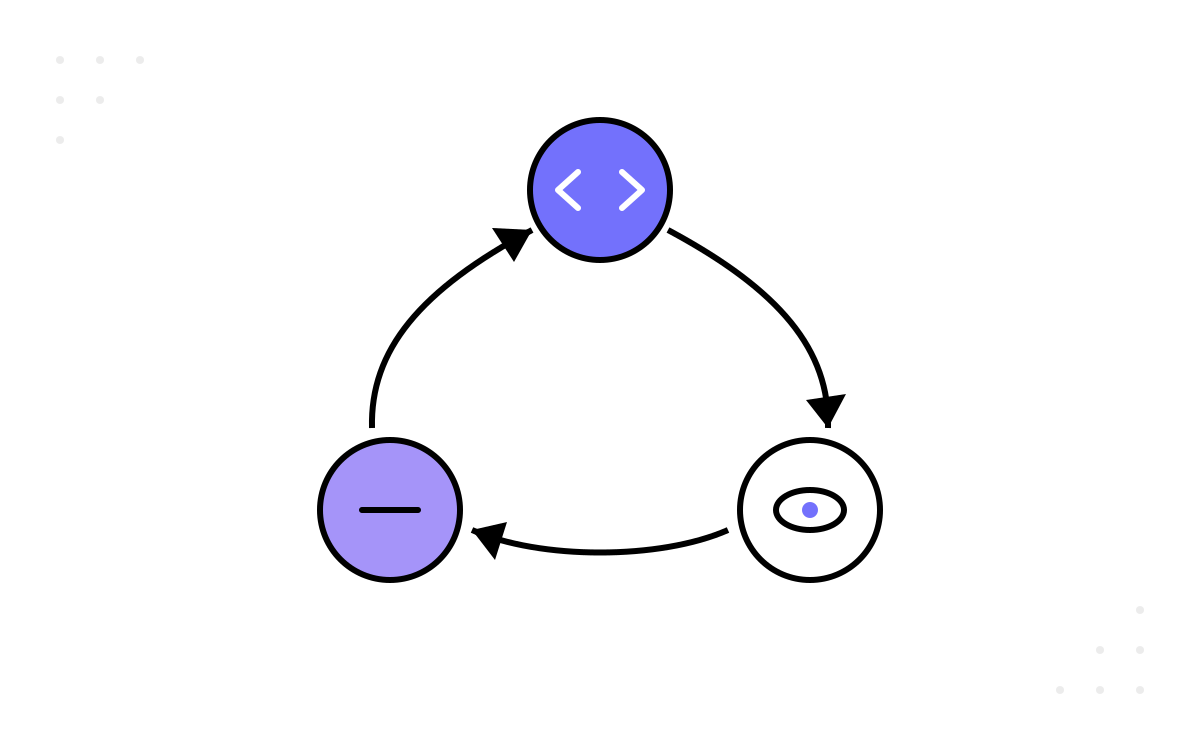
Execution is not one heroic pass - it is a three-step inner loop in which the agent codes, the output is read against the specification, and over-engineering is actively stripped out. The loop is my extension to the borrowed skeleton, and this is how it runs.
Agents now work unattended for stretches long enough that the conversation can no longer save you - why unstructured runs fail, the five-phase PREVC workflow I adapted from an open-source skeleton, and where this ten-part series goes.
The highest-leverage discipline in the stack is writing down what done looks like - what a specification must contain before an agent can execute for hours against it, and what Addy Osmani's 80% problem actually says about the work that remains.