The Route Table Is a Compiler Output
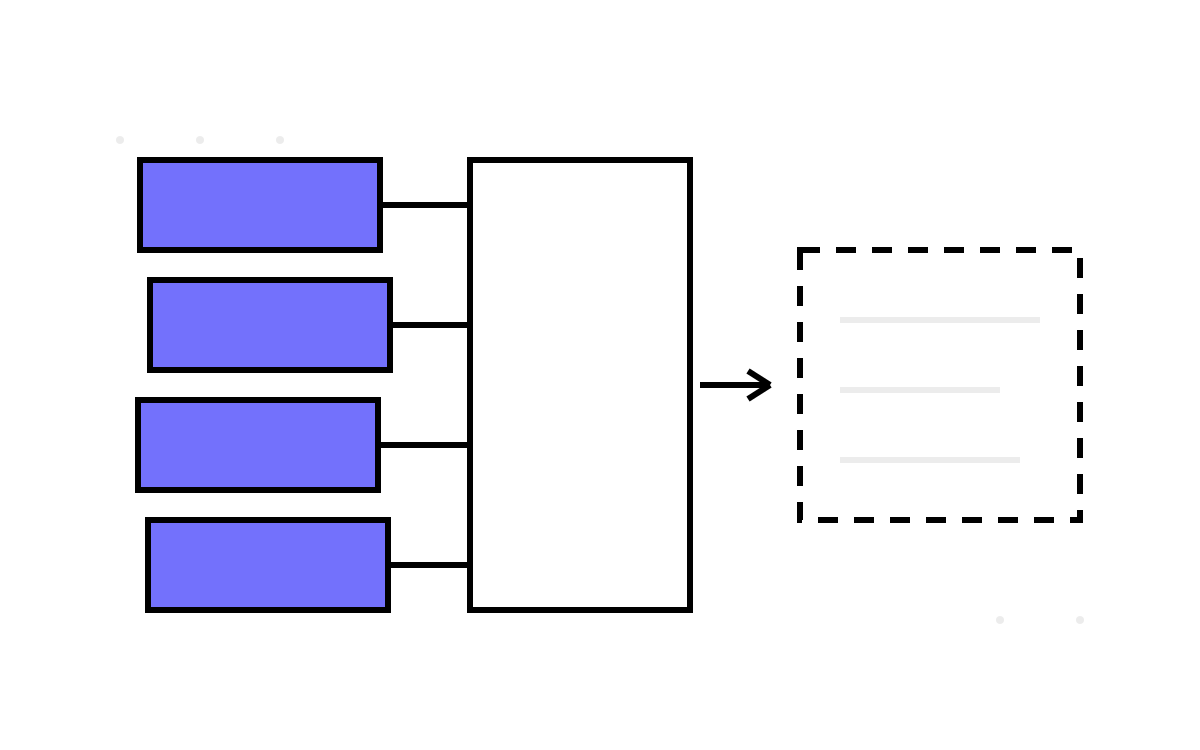
Ntrada writes no middleware - it compiles YAML into ASP.NET Core endpoints and lets the framework's matcher do the work. Then you try to declare a PATCH route.
Newest first, grouped by year. Search or filter by topic.
Ntrada writes no middleware - it compiles YAML into ASP.NET Core endpoints and lets the framework's matcher do the work. Then you try to declare a PATCH route.
Trill's monolith implements typed Get, Post, Put and Delete extensions over IEndpointRouteBuilder on .NET 5 - the framework .NET shipped eighteen months later, complete with query binding by string replacement.
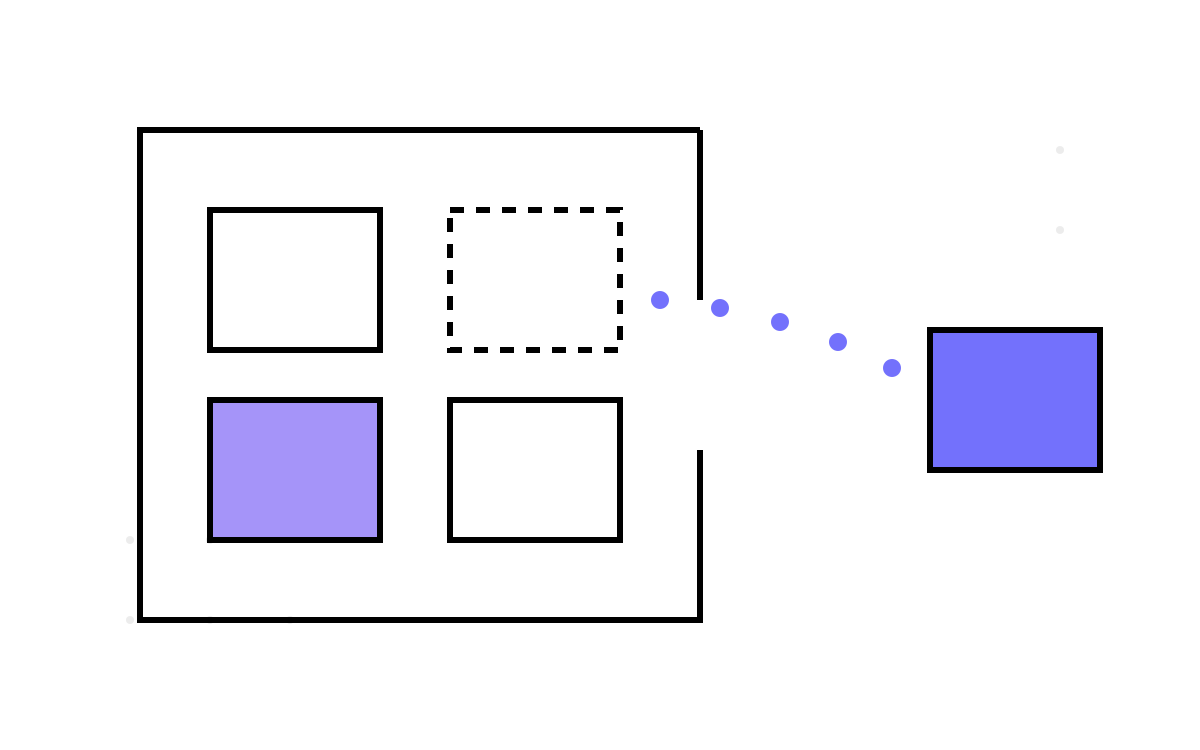
Which of ModularMonolith's three modules could become a service tomorrow, what blocks the other two, and the hardening bill the sample never pays - a retrospective on the modular monolith as a station, not a destination.
Conferences and Speakers disagree on layout, naming, id policy, exception visibility, mapping style and route constraints - plus a 200 that returns nothing and a broker that threw NotImplementedException for four months. The honest ledger.
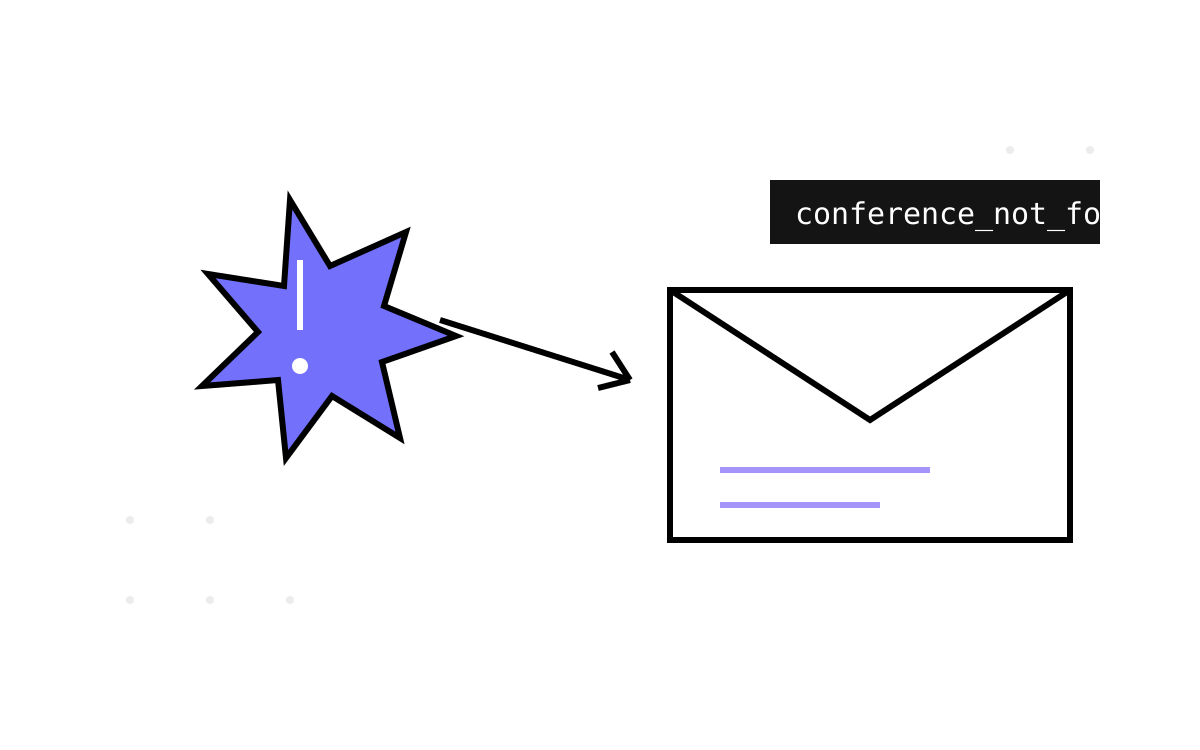
One middleware turns ConferenceNotFoundException into the wire code conference_not_found via Humanizer - a naming convention promoted to API contract, with a 400-versus-404 tension and Error-level logs it never resolved.
ModularMonolith's entities are public-setter data bags, its one immutability rule is a fixup with a comment, and its hardest domain question is asked in a comment and answered by nothing - a reading of domain modelling by annotation.
Conferences registers in-memory and EF repositories for the same interfaces and lets last-registration-wins pick - a live lesson in DI as strategy selector, dead registrations as fossils, and a no-op UpdateAsync nobody deleted.
A single boolean in appsettings decides whether ModularMonolith's events run inside your HTTP request or on a background pump - and each setting fails differently. Delivery semantics, read honestly from a ternary.
One Postgres database, one schema per module, and entity configurations that are all empty bodies - what ModularMonolith's data layer declares about future service boundaries, and what its migrations quietly gave away.
The last commit of ModularMonolith renames Name to ConferenceName in the subscriber's copy of its one integration event - and the JSON translator has delivered null into that field ever since. Anatomy of a silent contract break.
ModularMonolith builds its message broker from System.Threading.Channels and one BackgroundService - a textbook Message Channel and Event-Driven Consumer in miniature, with every missing enterprise-integration pattern visible by its absence.
ModularMonolith routes events between modules by class name and converts them by JSON round-trip - a one-line Message Translator that lets modules share contracts without sharing types, at a price the next part collects.
The last commit of ModularMonolith moves one line of Startup from first to last - and the whole cross-module event system depends on it. Assembly scanning, throwaway service providers and migrations inside ConfigureServices.
Every module in ModularMonolith plugs in through the same Add/Use extension pair - a recipe small enough to memorise, complete enough to be a mini-framework, and visible even where a module registers nothing at all.
ModularMonolith makes every controller internal and teaches MVC to find them anyway - compile-time module isolation from one feature provider, an InternalsVisibleTo chain, and the one place the wall has a hole.
DevMentors' ModularMonolith sample packs three conference-system modules, a mini-framework and one deliberately broken contract into eighty-four C# files - opening a series that reads all of it, defects included.
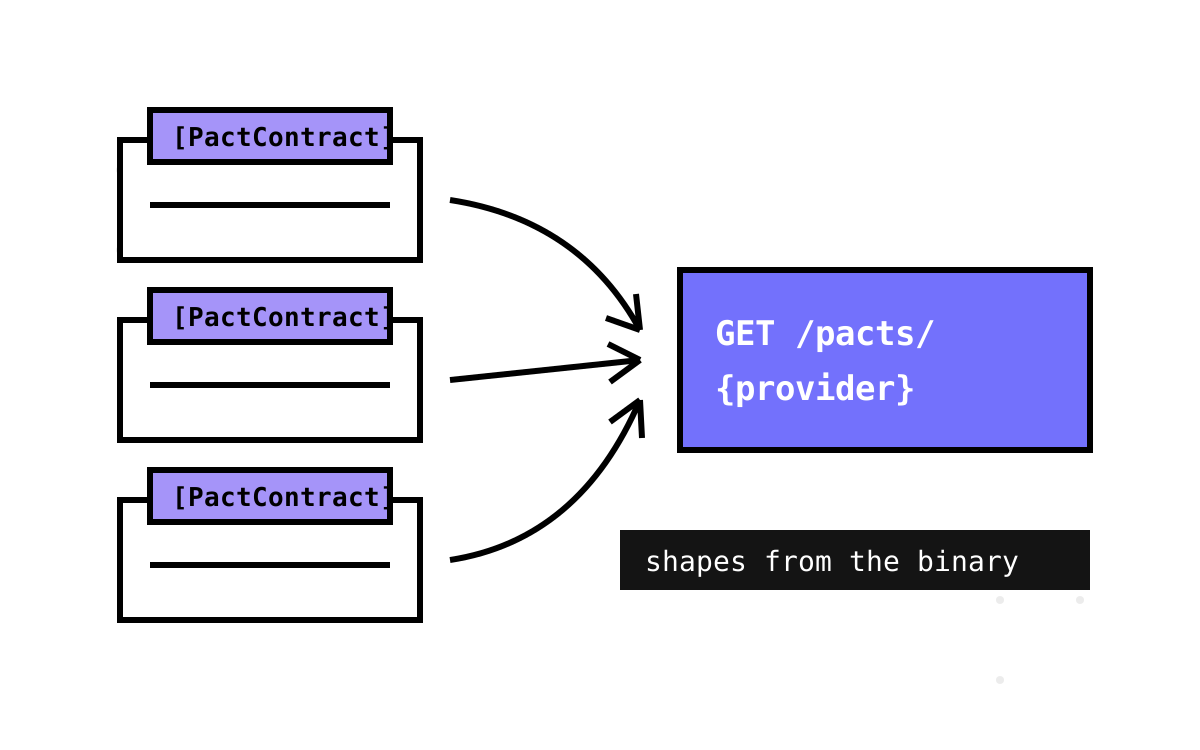
Pactify.AspNetCore in one sitting: an attribute, an assembly scan, and a /pacts/{provider} endpoint that serves your contract classes as live JSON - plus what a runtime contracts endpoint is really for.
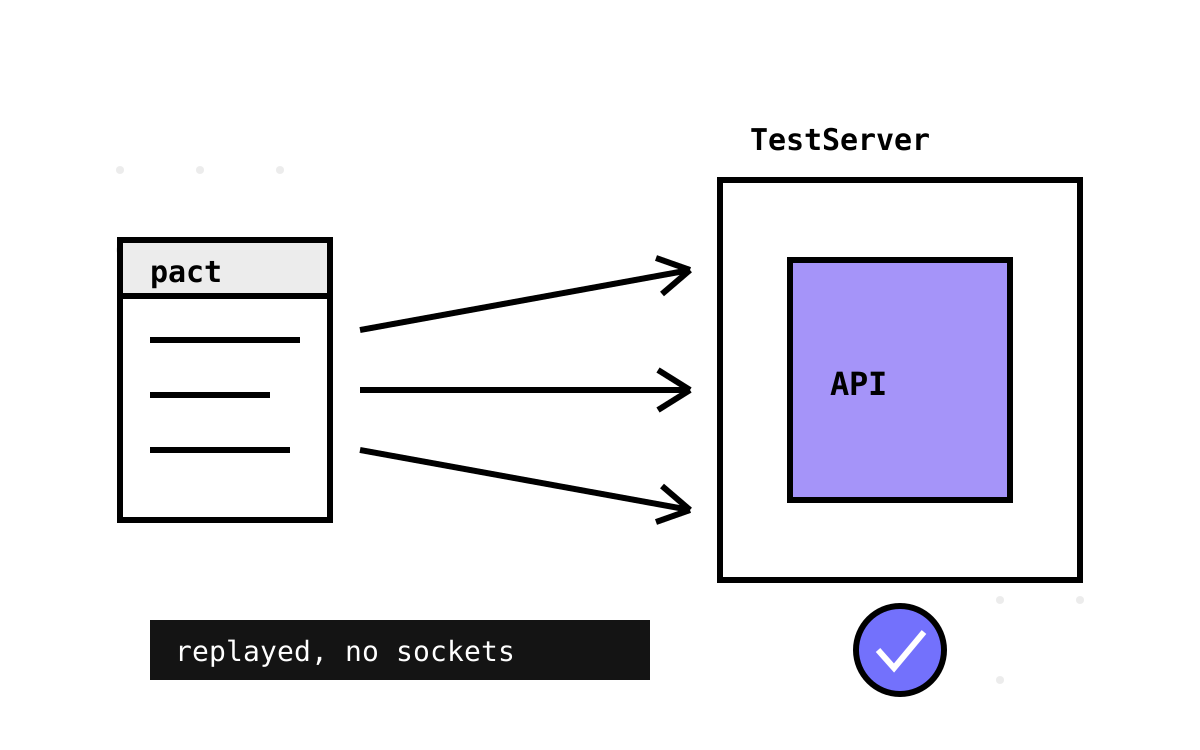
The provider side of Pactify - how CreateFor<Startup> hosts your whole API in memory with TestServer, why interactions verify concurrently, the SmartFormat trick behind endpoint templating, and the discovery that Given(...) never runs.
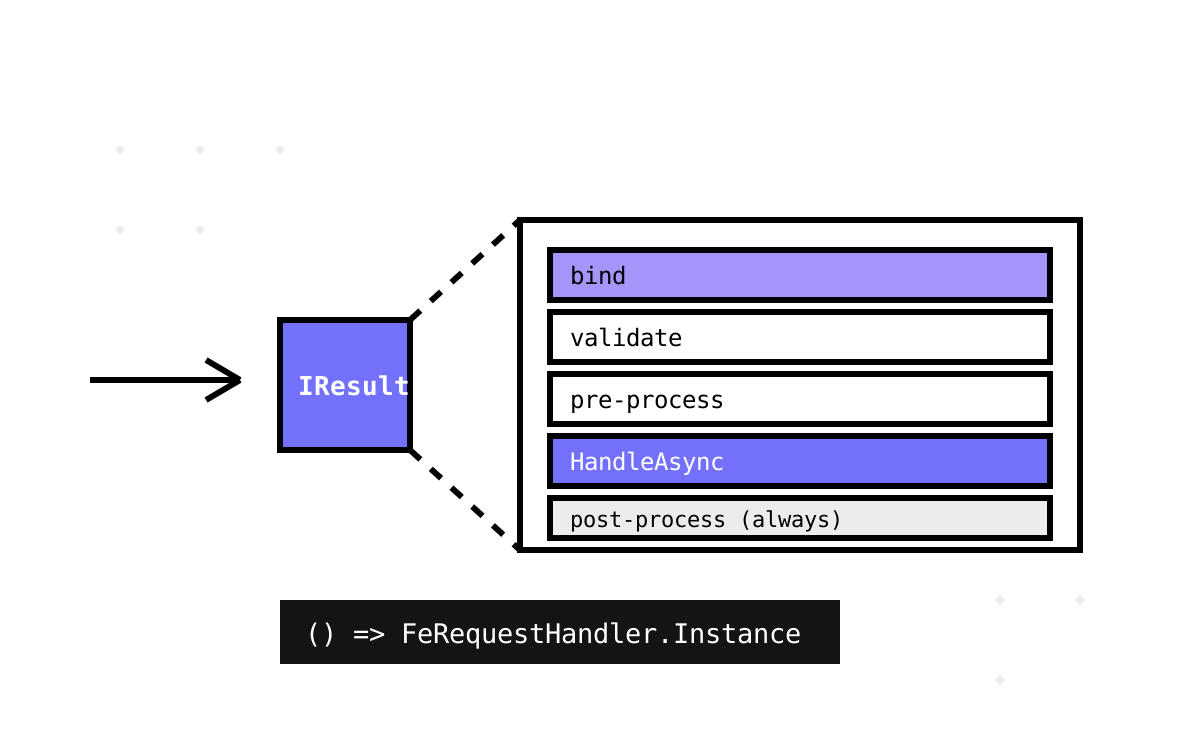
Every FastEndpoints route is mapped as a Minimal API whose handler returns the same singleton IResult - and that one weird trick is the door into the whole per-request pipeline. Part 3 of FastEndpoints in Depth.
Header, route, subdomain or query string: how the platform decides who is asking before it touches any data, how tenant identity becomes a connection string and a schema, and where the caching knives are hidden.
A 40-line entry script that is entirely commented out, thirty-one views carrying inline script blocks, a 2,904-line page file, and @section as the only architecture - the addendum's closing ledger.
A sequel stylesheet four times the size of the original, a sheet per screen, six copied tour themes, and a modal built as one inline HTML string - what a naming convention and a tokens file actually earn.
A 6.23 MB JavaScript bundle loaded on every page, a manifest that minifies CSS but concatenates JS, and two copies of jQuery - the first of four frontend chapters the attendance series skipped.
The platform bundled a client-side validation framework - one file of it twice - and wired none of it, hand-stitching every real check inside modal callbacks with manual error classes and keyup character counters.
The honest retrospective - copy-paste as a pattern, zero tests, PII in telemetry and what employee-monitoring data demands, destructive error handling, and the handful of decisions that genuinely earned their keep.