What Strategy-First Actually Bought Them
An honest retrospective on fifteen parts of source-reading - what the decision records bought, what they could not buy, and the compliance gaps nobody wrote down.
Newest first, grouped by year. Search or filter by topic.
An honest retrospective on fifteen parts of source-reading - what the decision records bought, what they could not buy, and the compliance gaps nobody wrote down.
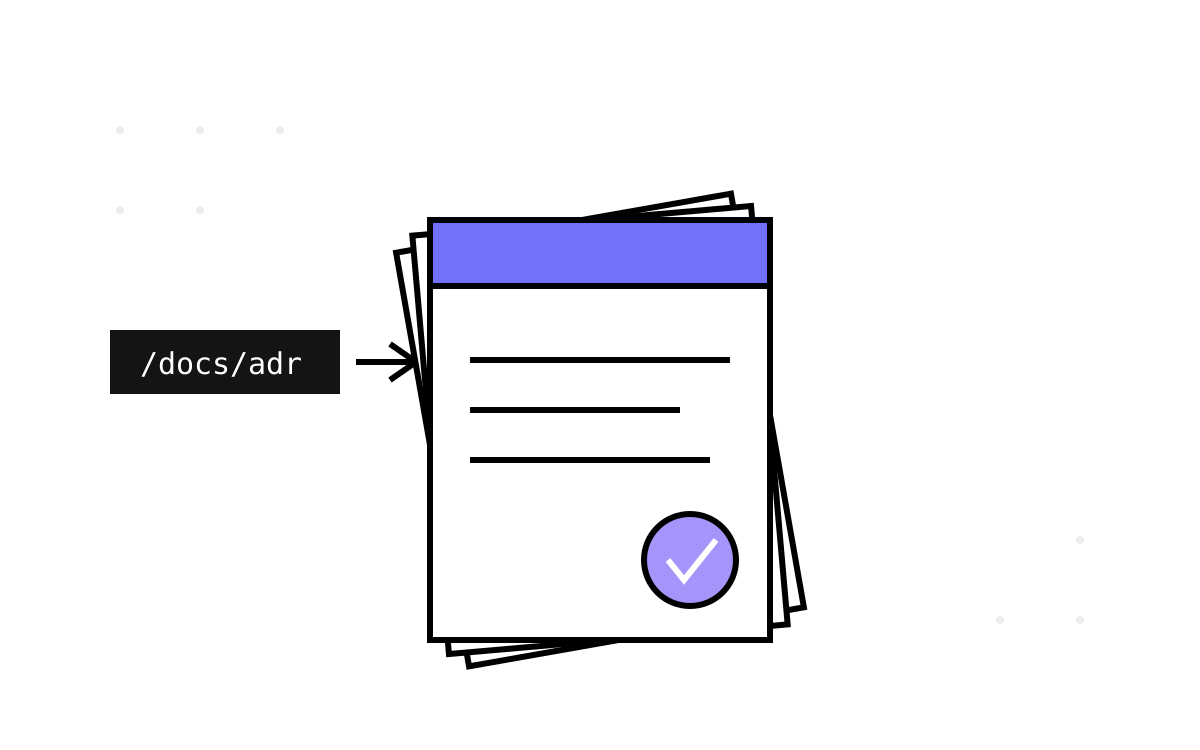
Four decision records with a named reporter and approver, no dates, no supersession, an architecture board hosted outside version control and a README that links code by line number.
Two events in GroupFlights have more than one subscriber, and both are where it breaks - two handlers ask "is this mine?" and two do not, in both directions.
A fully built cross-cutting decorator disables an entire context relationship behind a local variable that is always false - while a sibling module enforces the identical rule for real.
The event interface has no members, so nothing can carry a correlation id - and three modules each rebuild the pattern as application state, one of them in a static dictionary with a TODO.
ADR 04 extracts the reservation-change process out of Sales, lists ten steps and two recommendations - and nine of the ten steps are traceable to real code.
ADR 04 names one risk in prose - changing a reservation on stale information - and the table built to mitigate it has no version, no timestamp and no concurrency check.
One published type from the Communication module is mapped as an owned entity into TimeManagement's schema - so adding a field to your own contract now needs a migration you do not own.
Seven of thirteen published integration events in GroupFlights have exactly one consumer - the module that published them - and one has none at all.
ADR 01 chose a verbal ban on illegal project references over an automated architecture test - and the ban held perfectly, in an estate whose database boundary has no enforcement at all.
Seven contract projects are the estate's entire cross-module surface - and one misplaced marker interface drags the dispatcher framework into two of them by copy-paste.
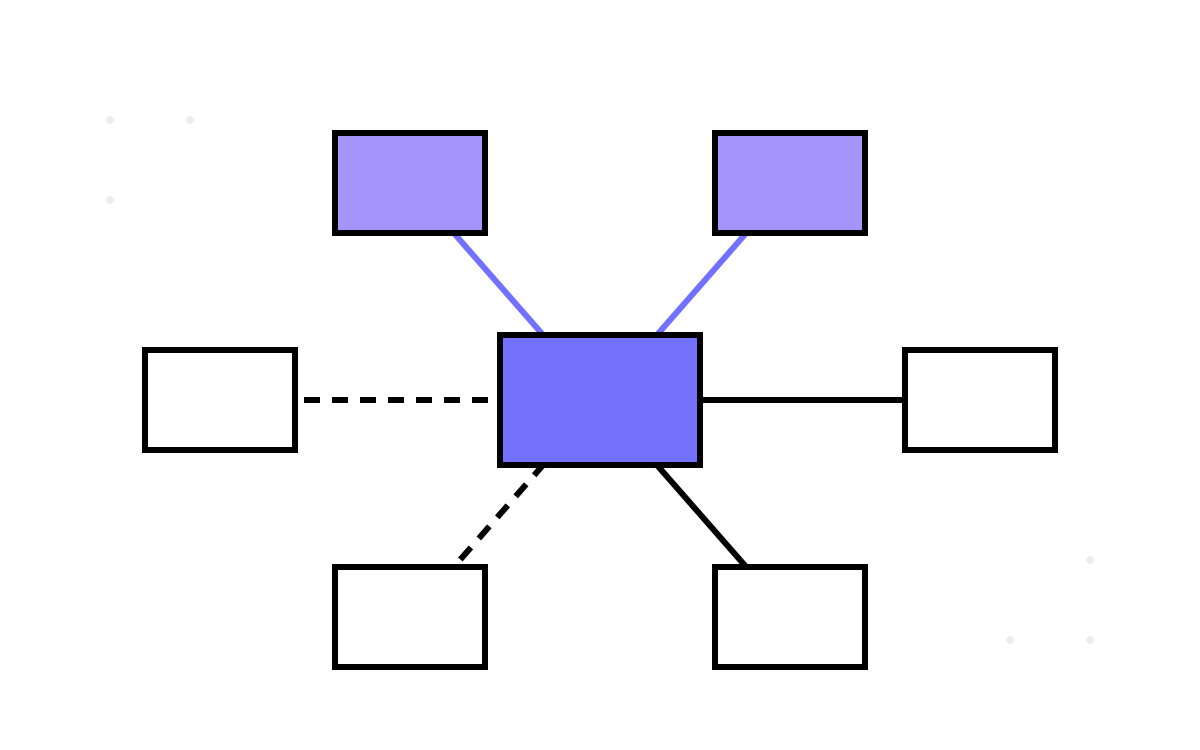
Three of the ten contexts on the context map have no code behind them - and reading the absences carefully separates a design placeholder from a forgotten promise.
A repeatable twenty-minute method for deriving a real context map from the project graph and the event subscriptions - then diffing it against the one on the wall.
ADR 03 declares six relationship patterns across ten bounded contexts and gives a reason for each - read on its own terms, before any code is checked against it.
GroupFlights picks a different application architecture per module on purpose - and the module nobody singled out turns out to hold the only real aggregate in the estate.
Most repositories ship code and a README - this one ships four ADRs with a named approver, a context map, a domain message flow and a methodology poster. Part 1 of a series that reads the strategic half of DevMentors' GroupFlights.