Skip to content
kc@kumarChandrachooda.com:~$ cd /blog/archive && read --section="top" 0%
Archive

Every article

Newest first, grouped by year. Search or filter by topic.

  • 556 articles
  • 6 matching
.NET 30 Nov 2025

The Aggregate as One Column

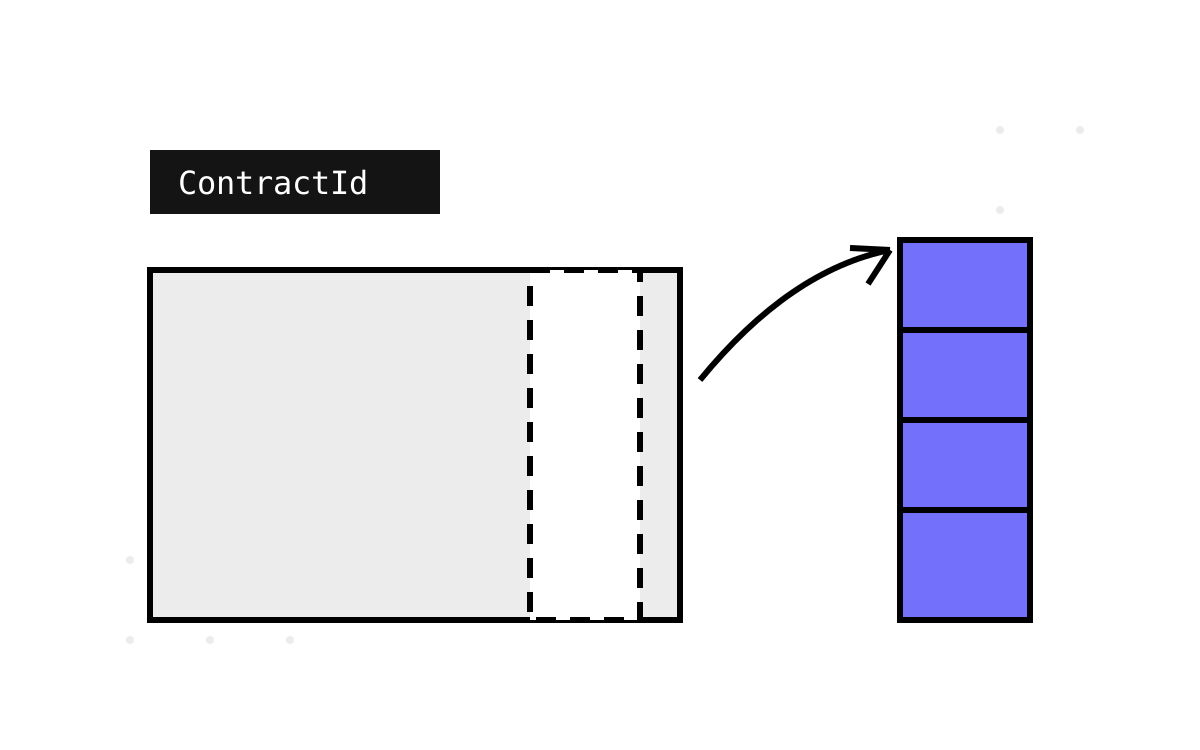
Sales stores four aggregate roots and twenty-five value objects in three tables, by serialising whole aggregates into jsonb - and the reflection resolver that makes reconstitution work bypasses every invariant on the way in.
.NET 30 Nov 2025

The Queries You Cannot Write

What the document strategy really costs - a promoted column, a side table, an in-memory dictionary with a TODO on it, and six update methods that look the row up without its id.

Data Warehousing 07 Aug 2025

Facts That Show Their Work

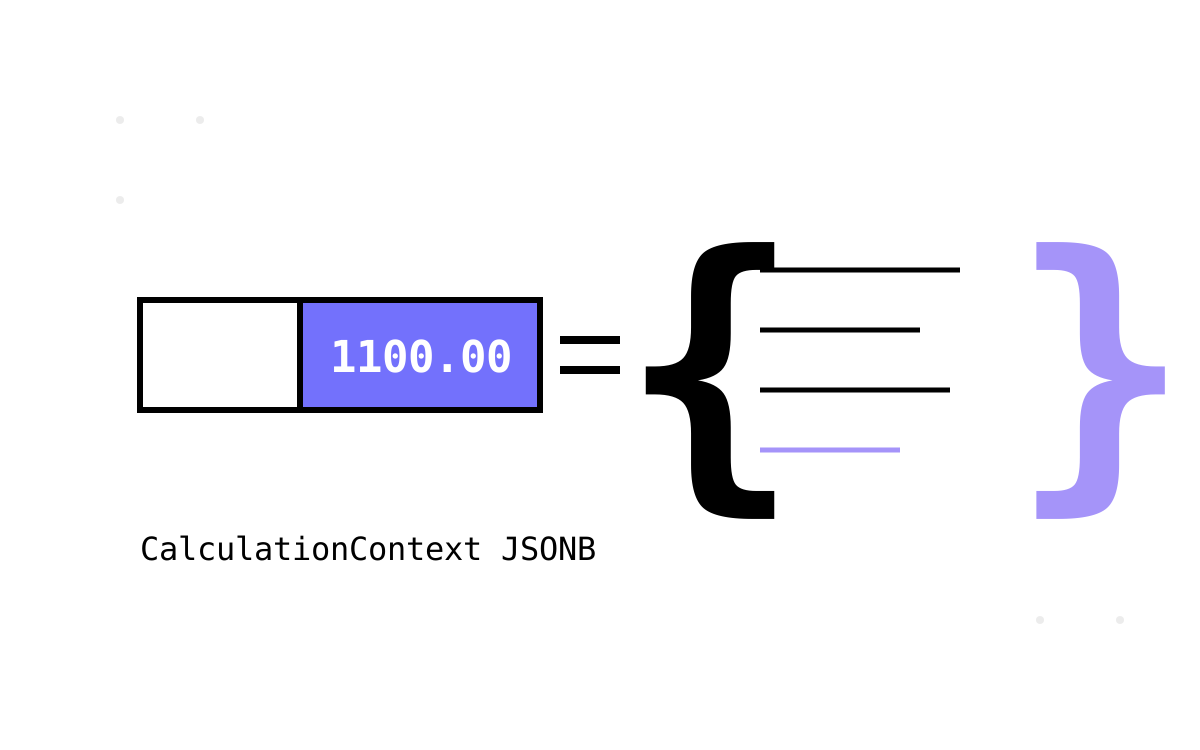
A stored number that can't explain itself is a number you can only trust. KC Star V4 promotes CalculationContext to JSONB and adds statistical columns to aggregates, so every fact carries a queryable record of the inputs and formula that produced it.

.NET 17 May 2025

Querying the Graveyard

The read side of archive-on-delete: querying archives through promoted typed columns, digging into jsonb payloads for everything else, polling snapshots with a 202 pattern, and an honest accounting of the restore path ArchiveKit doesn't have yet. Part 9 wraps up the Archive-on-Delete with ArchiveKit series.

.NET 14 May 2025

An Archive Table That Outlives Its Source

The storage design behind ArchiveKit - typed queryable columns and a jsonb payload from a single write, why the archive's EntityId is an index but deliberately not a foreign key, and the reflective model configuration that builds every archive table from one method call. Part 4 of the Archive-on-Delete with ArchiveKit series.

.NET 04 May 2025

The PostgreSQL Payoff: ltree Hierarchies and jsonb Payloads

Seven parts of migration machinery existed to deliver one table — a hierarchical crumb trail with three ltree columns, a jsonb payload, GiST and GIN indexes, and a Dapper read side that speaks PostgreSQL's native operators. This is why it was PostgreSQL all along.