JWTs and the Blacklist Problem
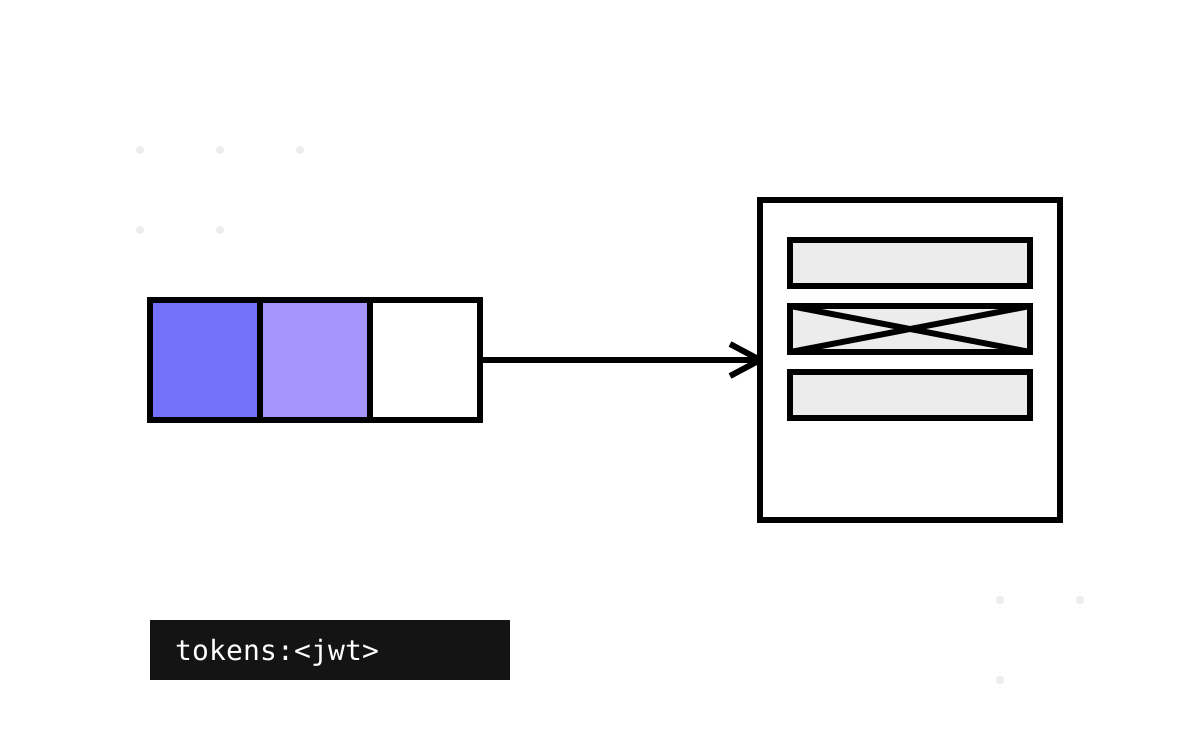
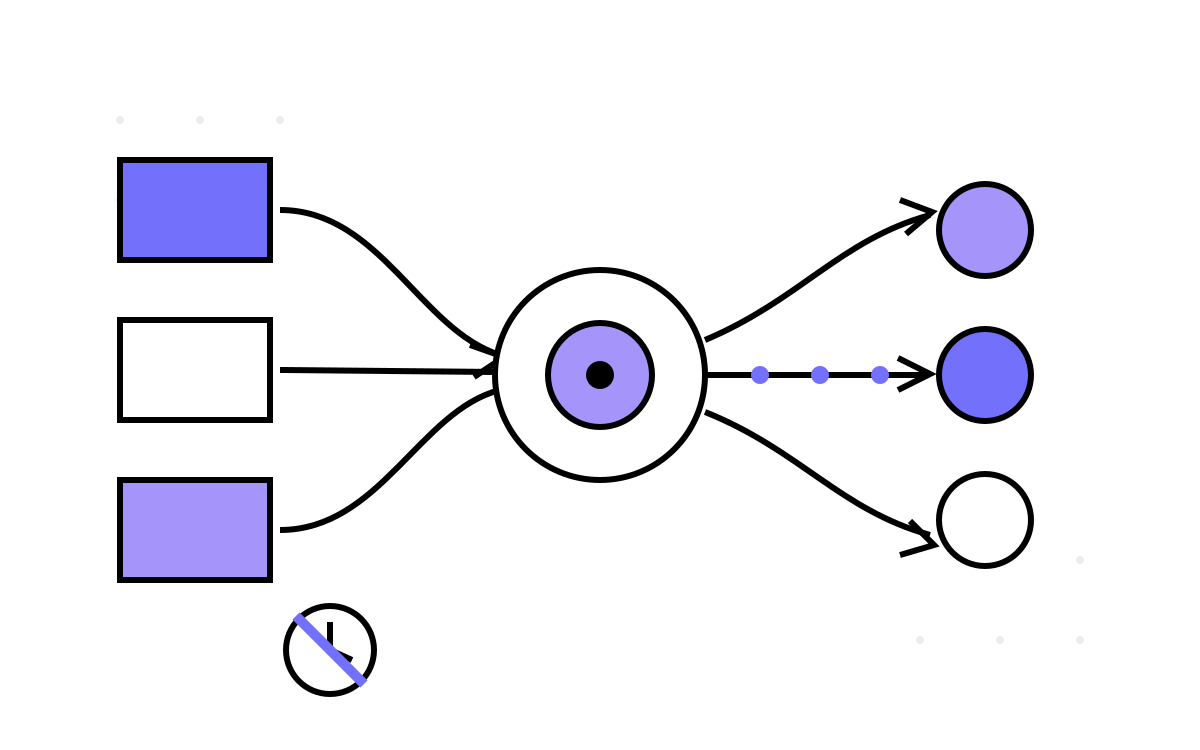
Convey's auth packages in two acts - a JWT layer that turns one config section into token issuing and validation, and the uncomfortable question every stateless system meets on logout day.
Newest first, grouped by year. Search or filter by topic.
Convey's auth packages in two acts - a JWT layer that turns one config section into token issuing and validation, and the uncomfortable question every stateless system meets on logout day.
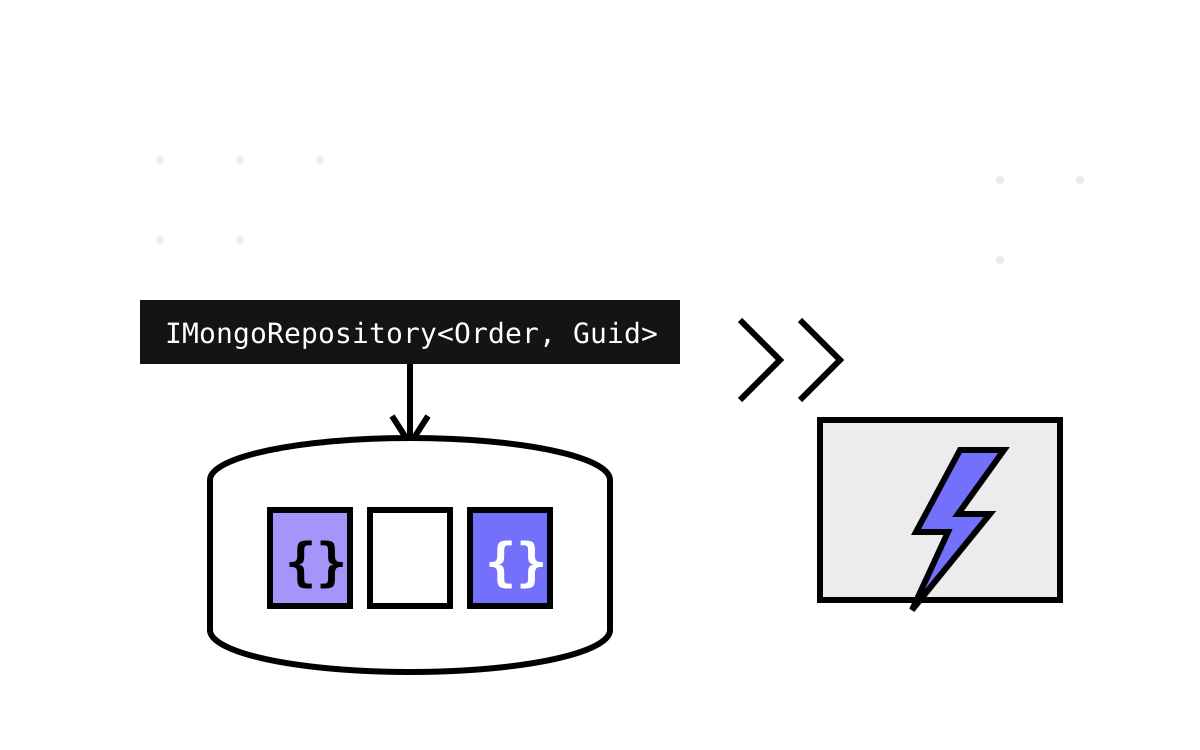
What you get when a chassis reduces MongoDB to one builder call and a named collection - a generic repository, paging, camelCase conventions, a seeding hook - and the transactions and indexes it deliberately leaves on your desk.
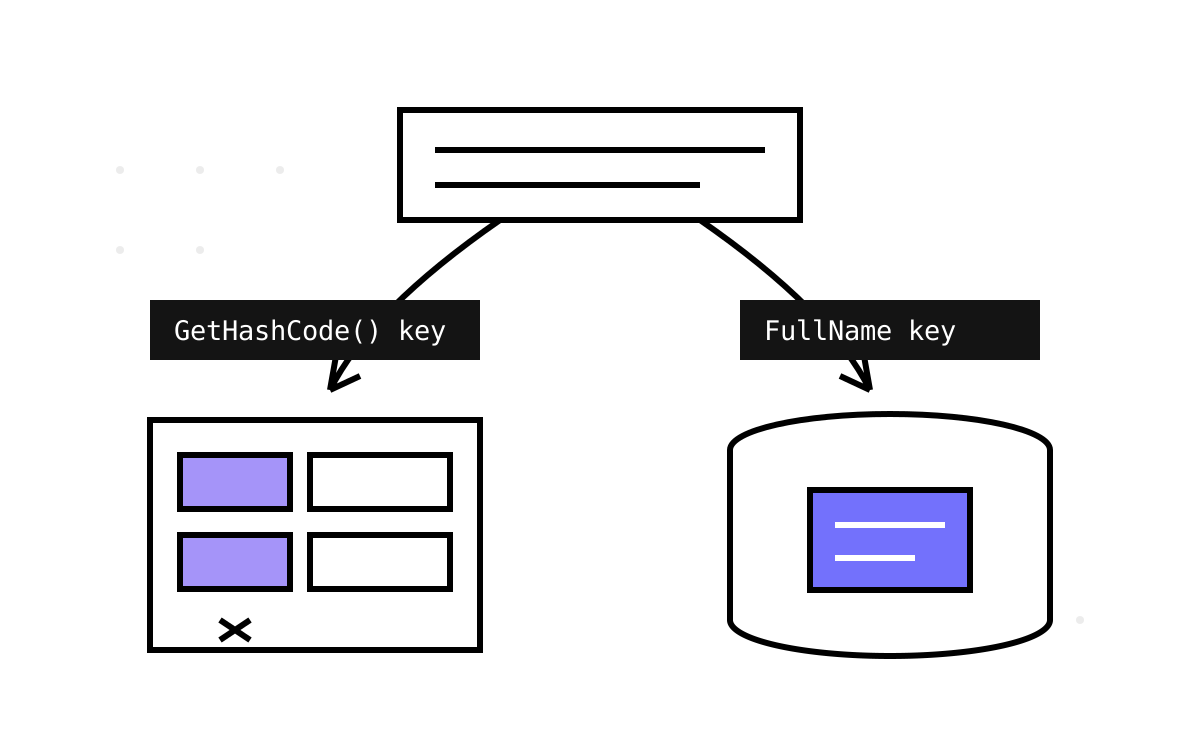
Chronicle ships two persistence integrations, and reading them against the contract is a masterclass in provider sharp edges: a Redis key built from Type.GetHashCode() that changes on every restart, a Mongo delete-then-insert, and messages that may not survive the round trip.
The smallest template in the catalog - a hundred lines of Redis cache config - as a study in what even the simplest secure-PaaS wrapper must still carry, and the one pipeline typo that quietly broke environment isolation. Part 8 of the Terraform Module Catalog.
Pacco's Identity service fits its whole auth machinery - JWT issuance, a refresh-token aggregate, Redis deny-list revocation - in about fifteen files, and most of them are right. The three that aren't teach more - a mapper bug that leaves 202 callers polling forever, a dead password check, and a refresh token that never rotates.
Pacco's Operations service narrates the estate twice - once over SignalR with a JWT handshake and per-user groups, once over a gRPC stream with no auth, no filtering, a per-call event-handler leak and a blocking Take. Same data, same service, two security models.
Pacco's async gateway answers a POST with two names - the ID a resource will have and the operation that tracks whether it ever gets it. Following both through the Redis state machine, the saga header override and the per-user SignalR push, warts and all - a five-minute memory, a 404 with three meanings, and a status API anyone can read.
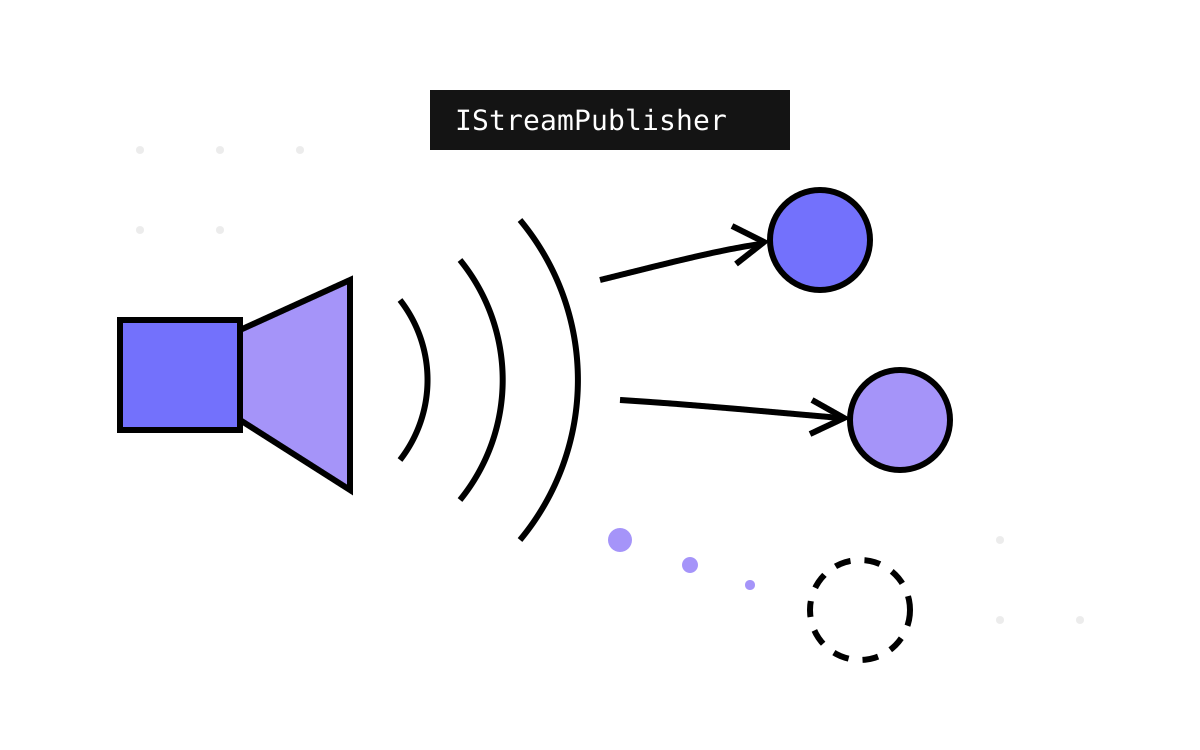
FeedR moves every tick between services through a two-method streaming abstraction with a no-op default and a Redis implementation - which, despite the namespace, is pub/sub rather than streams. What that seam buys, how DI last-wins overrides it, and what you lose when nobody is listening. Part 4 of the FeedR deep dive.
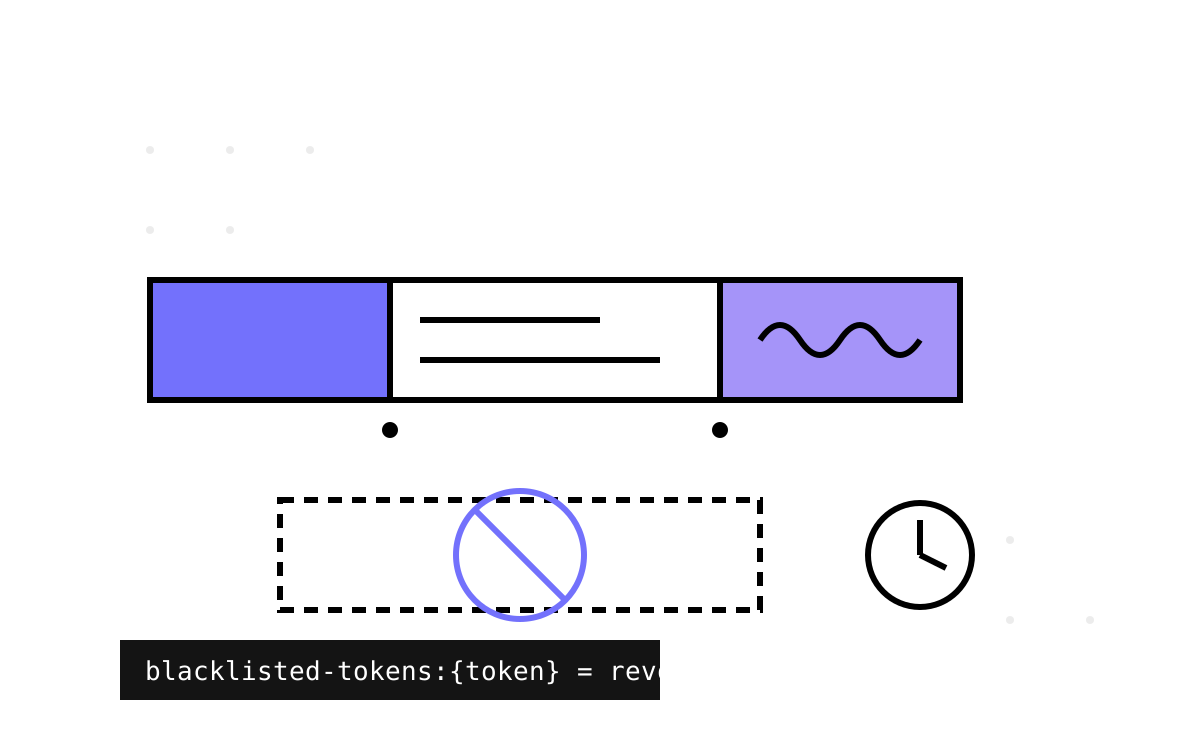
DShop.Common makes a stateless JWT revocable with a Redis deny-list and a per-request round-trip - plus an iat claim in milliseconds and two validators that disagree.
DShop runs a whole SignalR service to push operation results to the browser in real time - JWT handshake, per-user groups, Redis backplane. No frontend connects to it, and both UIs sleep through eventual consistency instead.
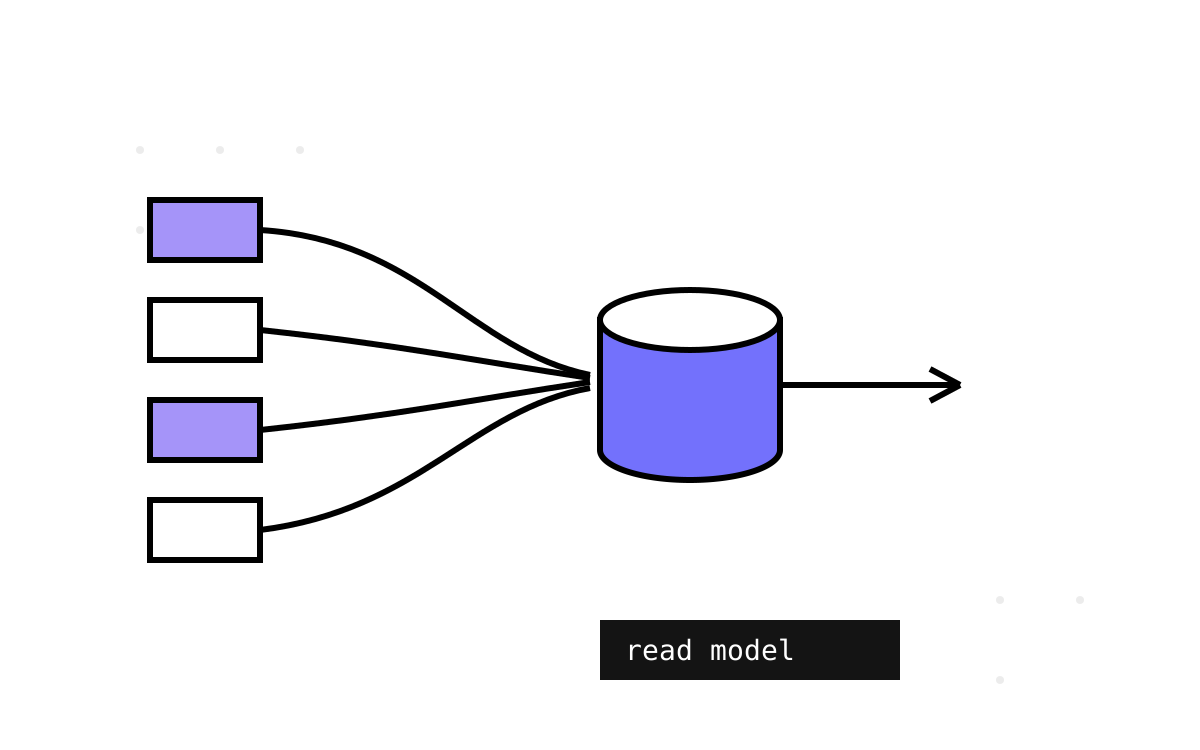
Storage subscribes to almost every event in DShop, serves read-only queries, and owns nothing it cannot rebuild - the read side of a CQRS split that runs across a service boundary instead of inside one. Part 10 of Nine Services and a Message Bus.
A guided tour of FeedR, DevMentors' open-source .NET microservices sample for real-time data feeds - six services, Redis pub/sub, Apache Pulsar and a gRPC stream, and the two-tier eventing model that makes it worth reading. Part 1 of a source-level deep dive.
In-memory session behind three App Service instances with affinity disabled, two distributed caches configured at once, a 1000-second easy-testing timeout, and a Redis expiry that throws every December.