The Chatbot Is Not a Strategy
A chat window bolted onto a product is not an AI strategy, and neither is an assistant licence mandated for developers - the case for adoption with intent, and the staged-maturity evidence behind it.
Newest first, grouped by year. Search or filter by topic.
A chat window bolted onto a product is not an AI strategy, and neither is an assistant licence mandated for developers - the case for adoption with intent, and the staged-maturity evidence behind it.
Every confusing statusline behaviour is a lesson about the harness underneath - the token arithmetic that refuses to match, the 300ms debounce, the five-second timeout, and the escape codes that fight back.
The statusline build, end to end - a stdin JSON contract, an entry point that reads once and delegates, a colour-coded session line, git platform routing, and the single settings.json entry that wires it all in.
The first exercise I give anyone learning to direct coding agents has no prompt in it at all - it is a status bar. Why sixty lines of PowerShell teach context and harness thinking better than any lecture about either.
The four disciplines that operate across my AI competency stack rather than inside it - agent architecture, evaluation, governance and domain translation - and why 37 of the framework's 100 points live outside the core.
The four core disciplines of my AI engineering framework and the argument behind their weights - why the prompt sits at the bottom of the stack at 8 points, why the specification sits at the apex at 22, and the sentence in my own document that its own table contradicts.
The transformation map between my two frameworks - what each of the seven traditional disciplines became among the AI-era eight, what split, what transferred with its weight intact, what dissolved into sub-disciplines, and the fifth learning-stack discipline that is deliberately not on the list.
The series retrospective - what was borrowed and from whom, what my extensions add and what they cost, the gap between the workflow as described and the runs I can actually evidence, and what I would do differently.
Where a five-phase agent workflow actually sits against PDCA, Scrum, waterfall, spec-driven development and the V-Model - one mapping table and five honest comparisons, because a workflow that cannot name its ancestors is hiding something.
PREVC's fifth phase is the one most cycles skip - a structured retrospective that turns observations into harness changes, and release documentation that writes the next cycle's requirements before it starts.
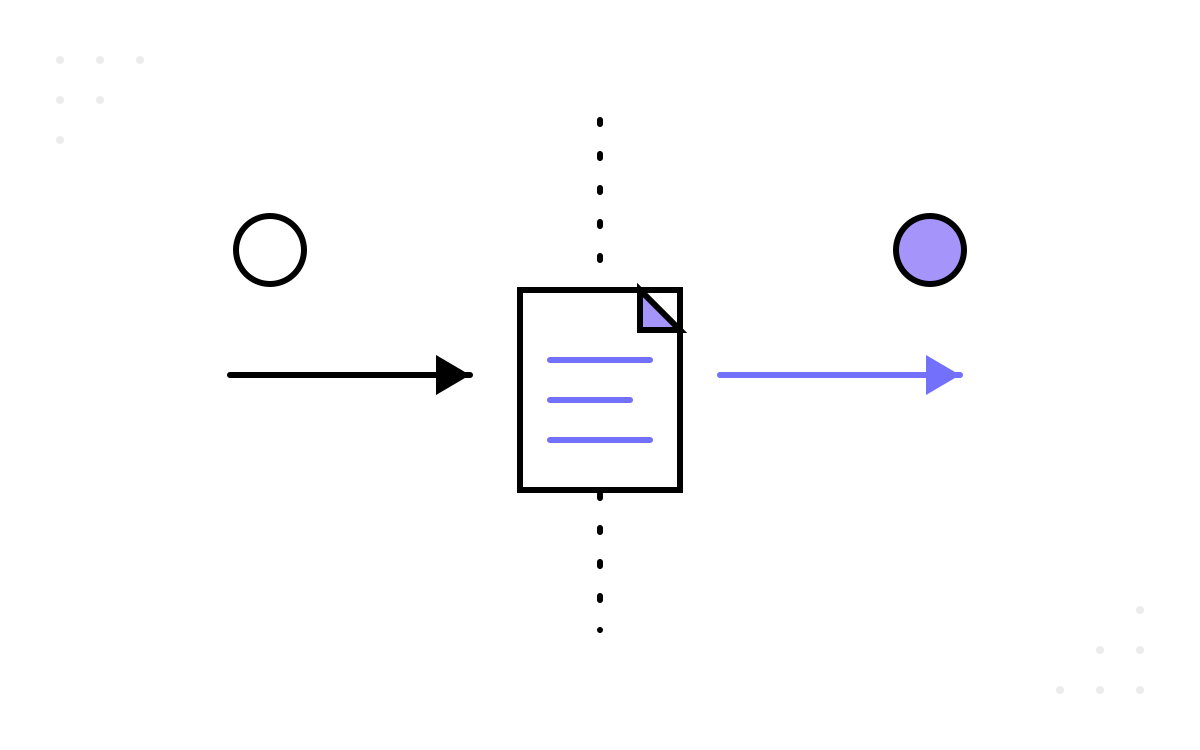
Validation traces every requirement to its implementation and every implementation back to a requirement - gap analysis, the traceability matrix, holdout scenarios the agent never sees, and the two feedback arrows that make the phase more than an audit.
The scariest agent mistake is not the invented method that errors on first run - it is the polished code that passes. Simon Willison's argument about hallucinations, and the four failure patterns I review for.
The Code-Review-Simplify loop has no natural end - an agent will polish forever if you let it. The four breakout constraints I arm around the loop, and how I match the exit to the risk of the work package.
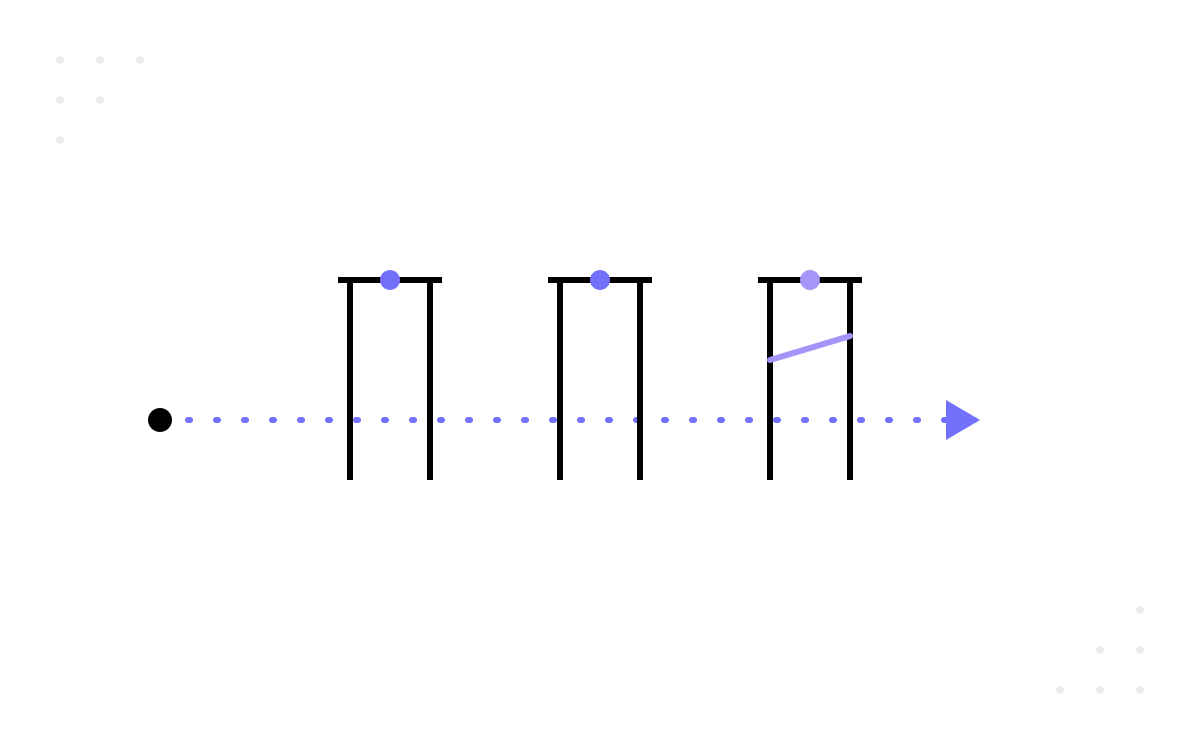
Execution is not one heroic pass - it is a three-step inner loop in which the agent codes, the output is read against the specification, and over-engineering is actively stripped out. The loop is my extension to the borrowed skeleton, and this is how it runs.
The Review phase is where a human takes an agent-graded plan and does the three things no score can - raise clarity, raise completion, minimise complexity - then encodes intent before a line of code exists. Why I call its exit the workflow's most important handoff.
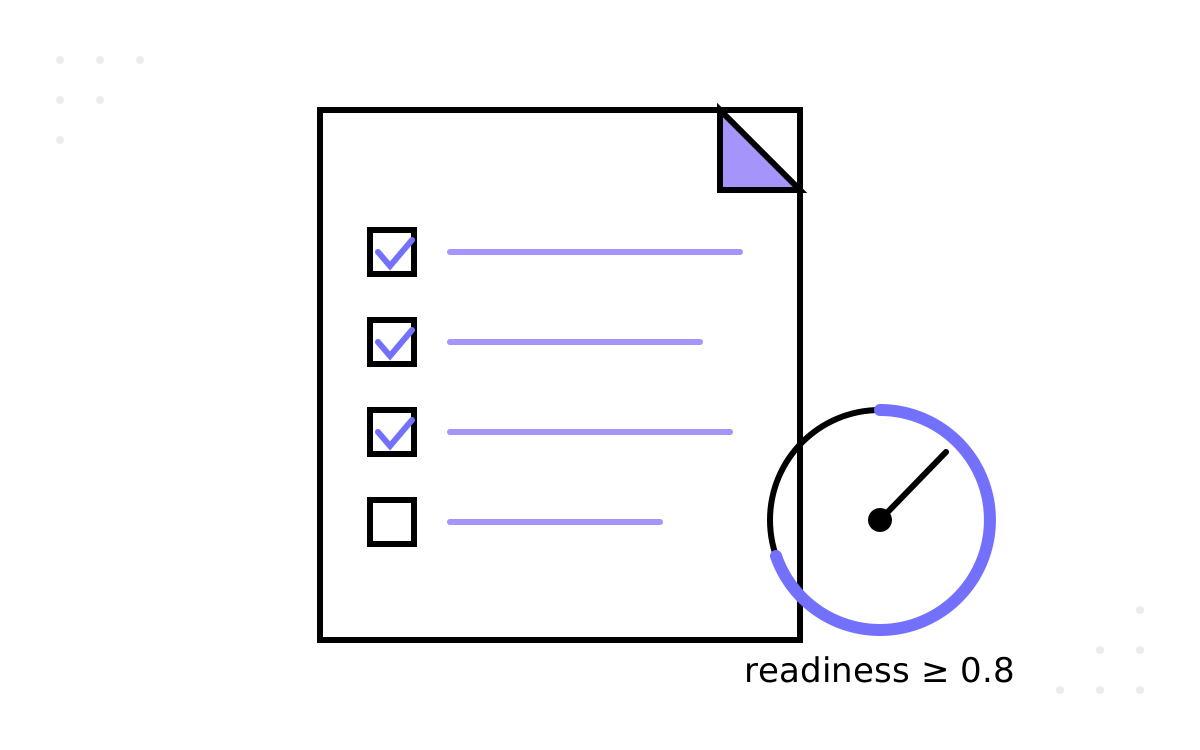
PREVC's Planning phase has the agent decompose the work the way project managers always have, then do something no methodology asked of it - grade its own plan. The work breakdown structure, the fifteen-minute waterfall, and the three scores I added.
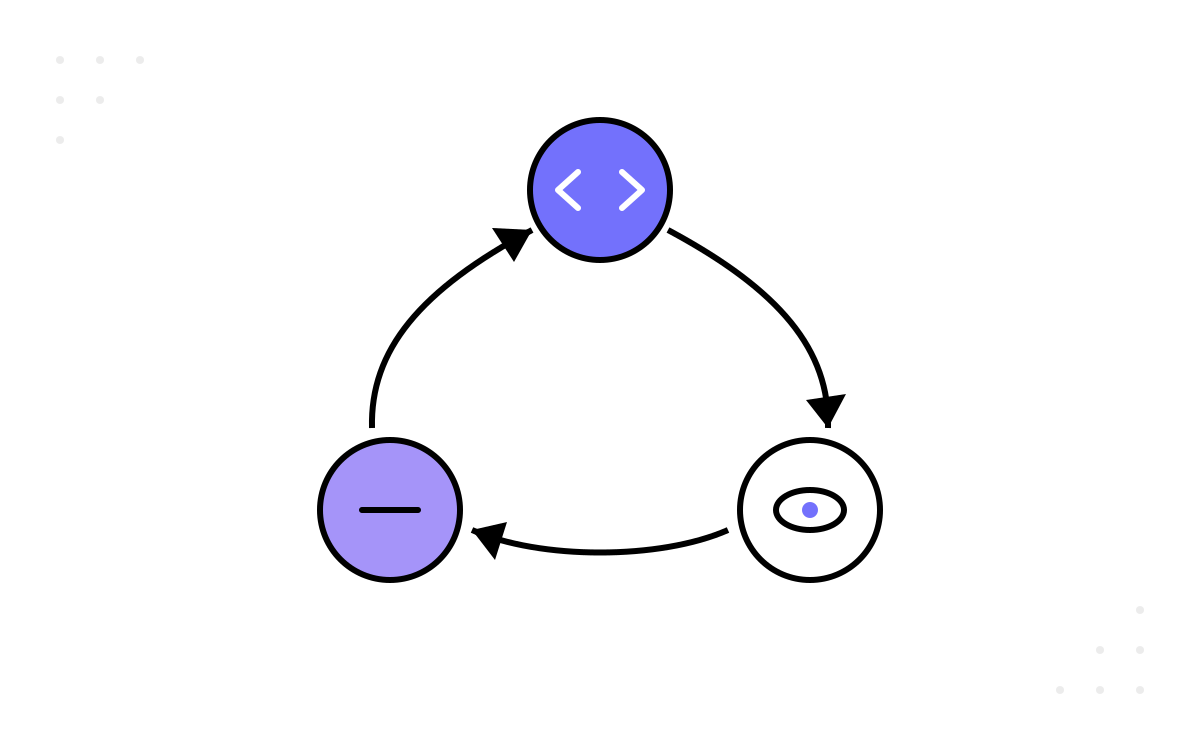
Agents now work unattended for stretches long enough that the conversation can no longer save you - why unstructured runs fail, the five-phase PREVC workflow I adapted from an open-source skeleton, and where this ten-part series goes.
The honest retrospective this series owes its readers - the thesis I believe but cannot cite, the threshold that is really one team's habit, the discipline with no how-to, the figures that will age, and the work you should not hand to an agent at all.
Dan Shapiro's Five Levels ladder maps where the industry actually stands with autonomous coding agents - most of it lower than it believes - and StrongDM's three-person software factory shows what the top rung looks like when someone builds it.
The disciplines tell you what to learn - the primitives are what you actually write. Five small, recurring artefacts of AI-directed work, from the self-contained problem statement to the evaluation harness, each shown with a worked example.
The highest-leverage discipline in the stack is writing down what done looks like - what a specification must contain before an agent can execute for hours against it, and what Addy Osmani's 80% problem actually says about the work that remains.
An agent can have perfect context and a flawless harness and still optimise for the wrong thing - what Klarna's 2024 launch figures and 2025 reversal actually teach about encoding organisational intent, and three mechanisms that stop that intent drifting.
Progressive disclosure at repository scale - how a hundred-line map steers agents through a million lines of code, what OpenAI's Codex experiment actually reported, and the benchmark run where changing only the harness moved an agent from Top 30 to Top 5.
Why the context file that says what an agent must and must not do stays current for months, while the one that describes how the code works is stale by Friday - and how to decide what loads always versus what gets fetched on demand.
The permanent infrastructure that makes every agent session start smart - tool configuration, codebase onboarding and workflow automation, and the evidence that the harness moves results more than the model does.