Load Order Decides What Your Traces See
An int? sorted into a HashSet, no shipped config that sets it, and two middlewares whose relative position determines whether your production failures appear in Jaeger at all.
Newest first, grouped by year. Search or filter by topic.
An int? sorted into a HashSet, no shipped config that sets it, and two middlewares whose relative position determines whether your production failures appear in Jaeger at all.
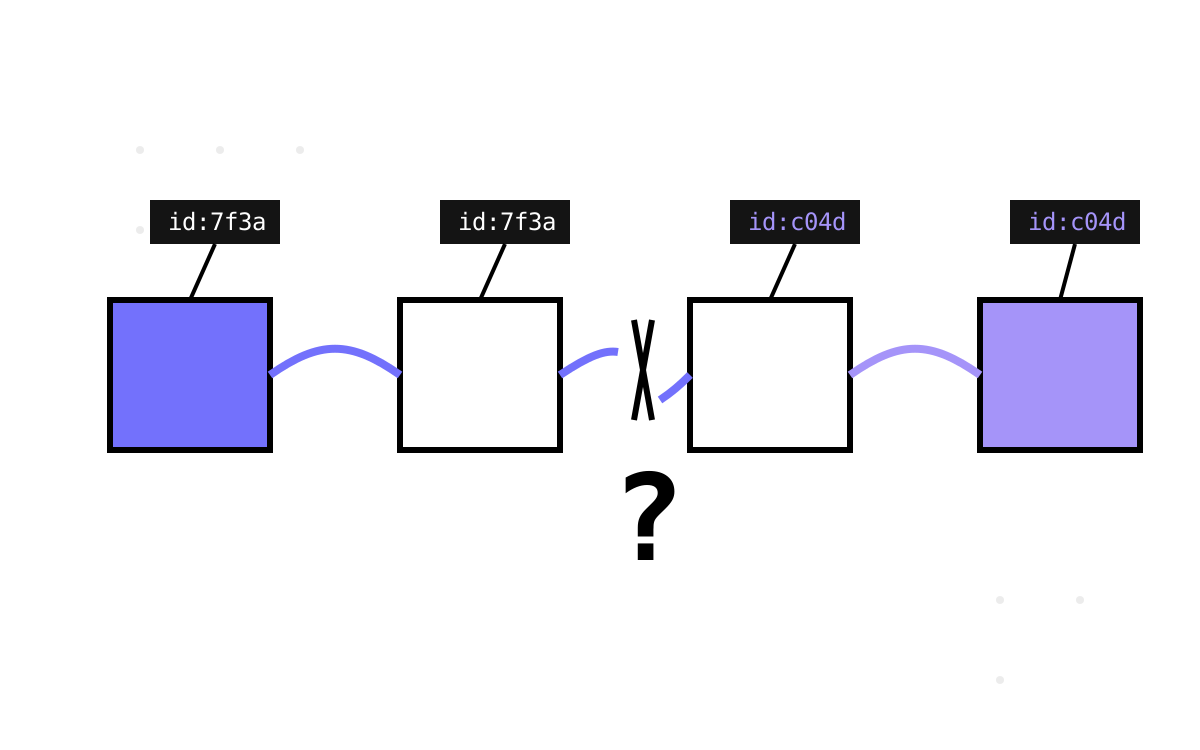
Inflow carries request identity across its async message boundary in a static AsyncLocal. The line that populates it uses null-coalescing assignment inside a long-lived loop, so every message after the first runs under the first one's correlation id, trace id and user.
Trill ships Jaeger, Prometheus, Grafana, Seq, Consul and Vault, and contains no circuit breaker, no dead-letter queue, no health check and no alert rule - the closing retrospective on what this estate gets right, what it does not, and when not to build a system this way.
Pacco traces every request, scrapes every service every five seconds and ships every log line to Seq - then forgets all of it on docker-compose down, because the telemetry stores are the containers whose volume blocks are commented out. The wiring is exemplary; the memory is the finding.
DShop wires Serilog, App.Metrics and Jaeger through one shared kernel, propagates a trace span on the message envelope, and hangs its Consul health check on an endpoint no controller defines. A tour of pre-OpenTelemetry observability.
A reusable try-catch-finally wrapper in DShop.Common awaits a null-conditional delegate - so the success path throws a NullReferenceException the failure path avoids.
DShop.Common decides a message's fate from the type of exception a handler throws - domain failures become events, infrastructure failures get retried.
DShop.Common's correlation context threads request identity through every message hop - and a long positional argument list quietly transposes half its fields.
Three toy services, ten infrastructure containers. Reading Convey's docker-compose stack as the honest bill of the chassis: what each container is for, which volumes actually persist, the per-OS variants, and what I would cut in 2026.
FeedR threads a correlation ID from a YARP transform through HTTP middleware and into Pulsar message metadata - and quietly loses it at the Redis hop in the middle. Tracing exactly where the chain holds and where it breaks is the best observability lesson in the sample. Part 8 of the FeedR deep dive.
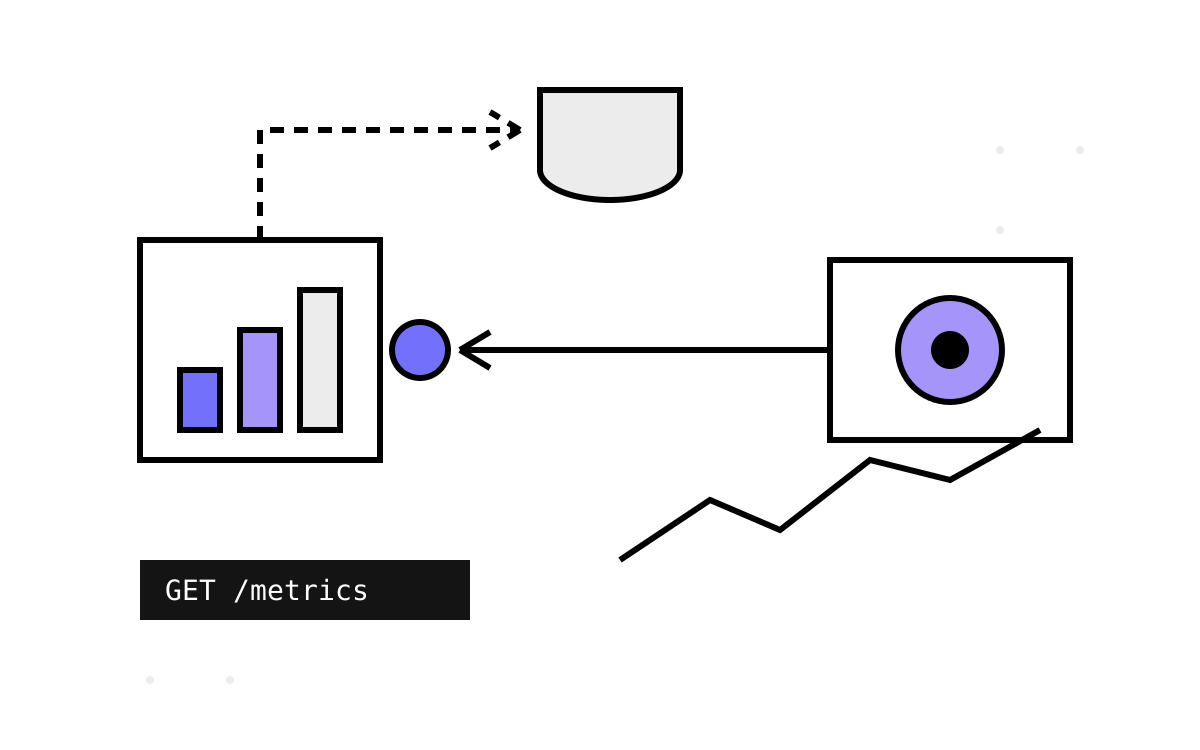
Convey ships two metrics packages that answer the same question from different eras - a push-flavored App.Metrics stack and a lean prometheus-net scrape endpoint - and the choice between them is a history lesson.
A 22-character job name, a 20-character column, and an error handler that has thrown on every attempt since the day it shipped - plus the four parallel logging systems that still could not catch it.